
Roblox is not a social network that children happen to use. It is a platform built for children, whose core value proposition is that strangers can meet, build, and talk inside shared virtual spaces. The lawsuits argue that this design made adult-child contact frictionless, that the company understood that, and that its moderation never scaled to the risk it had created.
Status at a glance
Active · expandingWho may be able to file
The federal cases are brought by people who were minors when the contact happened, or by parents on behalf of a child. The Judicial Panel on Multidistrict Litigation summarized them in its December 12, 2025 transfer order: plaintiffs allege that children were sexually exploited, and in some cases assaulted, by adults who found and groomed them through Roblox, then persuaded them to continue on a second platform such as Discord, Snapchat or Instagram, or by text or video call.
That second step is the ordinary shape of these cases, not a gap in them. A claim against the platform does not say the company committed the abuse. It says the company’s design, including anonymous adult-child contact, weak age checks, private messaging and moderation the plaintiffs allege was inadequate, created a foreseeable path to the harm. Whether a particular family has a claim depends on the facts, the state and the dates, and a lawyer has to look at those before anyone can say.
Every case on the Panel’s original schedule was filed under initials or as a Doe, and on October 5, 2026 the MDL court entered a consolidated order appointing guardians ad litem for minor plaintiffs (docket). Our guide to filing anonymously explains how that request is made, and our page for families covers what to do first.
Deadlines that apply
No single deadline governs these cases. Where the person harmed was a child, the filing deadline is usually measured from the age of majority rather than from the date of the conduct, and several states have widened that further through age-based caps and revival windows. The deadline that governs is the one in the state whose law applies to the claim, which is not always the state the family lives in. Our 50-state deadline reference is the place to start.
A second timing issue is particular to platforms. The companies’ terms of service carry arbitration clauses, and the defendants told the Panel they would move to compel arbitration in many, if not all, cases. The Panel expected the MDL court to consider whether the Ending Forced Arbitration of Sexual Assault and Sexual Harassment Act (9 U.S.C. § 402) rules out arbitrating these claims. That question decides where a case is heard, not whether it is late.
The deadlines described here are general rules, and most of them have exceptions. The date that governs a particular claim turns on the state, the person’s age when the abuse happened, when they connected it to the harm it caused, and who the defendant is. A claim against a public agency or a public school can carry a written notice requirement that runs out long before the ordinary deadline.
Nothing on this page can tell you your own date. A lawyer who looks at your facts can, and there is no charge to ask.
What the lawsuits allege
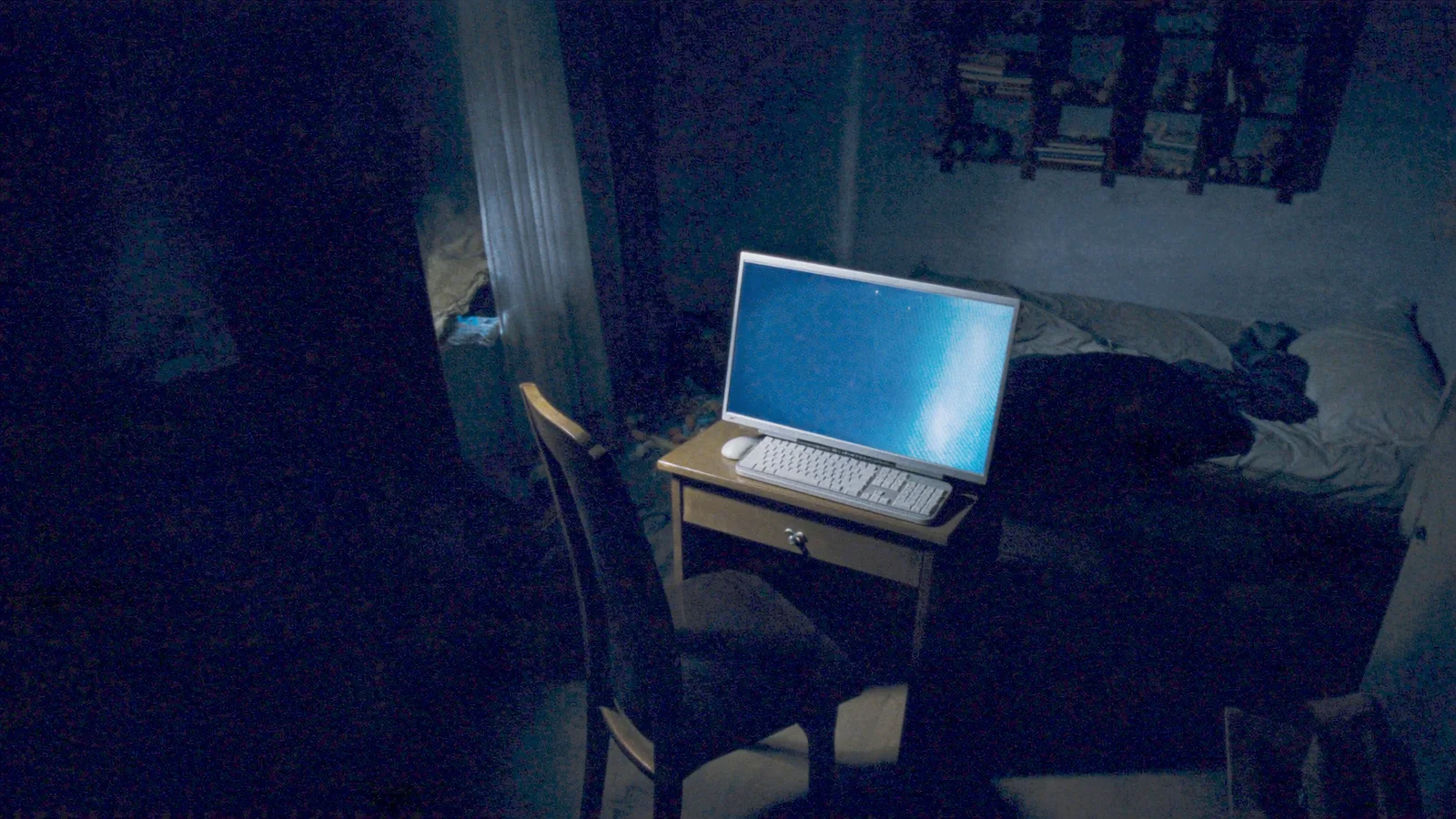
The complaints, whether brought by families or by state attorneys general, converge on a set of design and conduct claims rather than on any individual user’s speech. The federal plaintiffs plead fraudulent and negligent misrepresentation, negligence, failure to warn and design defect. That framing is deliberate and legally necessary; see the Section 230 discussion below.
- Age verification that did not verify. Self-reported ages, with nothing preventing an adult from presenting as a child or a child from accessing adult-facing areas.
- Private communication between adults and children by default. Direct messaging and in-experience chat that allowed one-to-one contact without a parent ever seeing it.
- Moderation that did not scale. Automated filters and a human review capacity that plaintiffs allege was far below what the platform’s volume of child users required.
- Reports that went nowhere. Allegations that user reports of predatory conduct did not reliably result in account removal, and that removed users could return with new accounts.
- Off-platform handoff. That the platform’s design allowed and effectively facilitated moving a child to another service where oversight was weaker.
- Safety representations. Marketing to parents that the plaintiffs allege did not match internal reality.
These are allegations. No court has found them true. Roblox denies them, and in the Nevada consent judgment it “denies any wrongdoing and the allegations in the Complaint.” It has publicly defended its safety investments, and in a statement reported by Biometric Update on June 23, 2026 it said it “strongly dispute[s] the claims” in the Arkansas suit.
The “two-stage predatory pipeline”
Arkansas sued Roblox and Discord together on June 11, 2026, filing in the Superior Court of California for the County of Los Angeles rather than in an Arkansas court. Paragraph 92 of the complaint describes the mechanism in a single phrase: “Roblox and Discord function together as a two-stage predatory pipeline.” That phrase has since shaped how these cases are argued.
An adult creates an account on a platform designed for and populated by children. Contact is normal there. Over days or weeks, through play and chat, trust is built and isolation from parents begins.
The conversation moves to a second platform with weaker moderation, private servers, and messages that can disappear. Requests escalate. Because the child now has a relationship they value and a secret they are ashamed of, disclosure becomes far less likely.
Arkansas’s framing treats the two companies as complementary components of a single foreseeable process, rather than as unrelated defendants each responsible only for what happened on its own service.
Both companies dispute the Arkansas claims. Our Discord page covers the second stage and the three state suits against Discord. The grooming pattern itself is described on our grooming page.
The federal MDL
A multidistrict litigation gathers separately filed federal cases before one judge for shared pretrial work such as discovery and expert rulings. Each case stays its own, and each plaintiff keeps their own claim. The Panel created this one on December 12, 2025, when it counted 31 actions in twelve districts and 48 related actions, and sent them to Chief Judge Richard Seeborg in San Francisco (No. 3:25-md-03166-RS). Roblox, Discord, Snap and Meta all opposed centralization.
Total filings have risen in every report since. The Panel’s pending-dockets reports list 177 pending cases on August 3, 2026, 182 on September 1, and 180 pending, with 190 filed in total, on October 1, 2026.
The Panel named the questions it expected to come up in every case: whether Section 230 or the First Amendment bars the claims, whether the platforms owed a duty to protect users from third-party predators, whether those third parties’ acts break the chain of causation, and whether the claims can be forced into arbitration. Cases that also name a second platform will run on what the Panel called “highly similar factual questions regarding their respective platforms,” and the court may set separate tracks for them.
The state attorney general suits
In its quarterly report for the period ending June 30, 2026, Roblox told investors that as of July 30, 2026, Arkansas, Florida, Indiana, Iowa, Kentucky, Louisiana, Nebraska, Oklahoma, Tennessee and Texas had sued it, as had Los Angeles County. The table gives the dates we have confirmed against each state’s own record.
| State | When | Target, theory and status |
|---|---|---|
| Nevada | April 15, 2026 | Settled by consent judgment for $12.5 million, with six years of safety terms; no admission |
| West Virginia | April 21, 2026 | Settled for $11.08 million, with age verification before chat |
| Alabama, Mississippi, South Dakota | By July 30, 2026 | Settled, according to Roblox’s Form 10-Q |
| Texas | November 6, 2025 | Sued Roblox in Travis County under the Deceptive Trade Practices Act and common nuisance law. On March 6, 2026 the court dismissed the nuisance claim and let the DTPA claim proceed. Texas sued Discord separately; see our Discord page |
| Tennessee | December 18, 2025 | Sued under the Tennessee Consumer Protection Act. The Williamson County Chancery Court denied Roblox’s motion to dismiss (announced September 22, 2026) |
| Louisiana, Kentucky | By December 12, 2025 | Suits noted by the Panel in its transfer order as recently filed |
| Nebraska | March 4, 2026 | Sued Roblox |
| Indiana | May 6, 2026 | Sued Roblox and Discord under the Indiana Deceptive Consumer Sales Act (Hamilton Superior Court 1) |
| Oklahoma | May 14, 2026 | Sued Roblox |
| Iowa | By July 30, 2026 | Sued under the Iowa Consumer Fraud Act in Polk County; motion to dismiss granted in part and denied in part on May 13, 2026, according to Roblox’s Form 10-Q |
| Arkansas | June 11, 2026 | Sued Roblox and Discord in Los Angeles, alleging a “two-stage predatory pipeline” |
| Florida | By July 30, 2026 | Suit listed in Roblox’s Form 10-Q |
They do not compensate you, because that money funds state programs. What they produce is discovery, and discovery produces documents. Internal records about what a company knew, and when, surfaced in a state enforcement action become available to every private plaintiff litigating the same facts. State cases frequently do the evidentiary heavy lifting for individual claims.
Settlement and compensation status
Every settlement on record is with a state. The Nevada consent judgment in State of Nevada v. Roblox Corporation (Clark County District Court, Case No. A-26-944136-B), filed April 15, 2026, totals $12.5 million: $10 million to the Attorney General in installments through October 31, 2028, $1 million for a public-safety campaign, and $1.5 million for a Nevada law-enforcement liaison. It says no part of the payments is a civil penalty. Its business-practice terms run for six years and include age assurance and limits on chat between adults and users under 16, unless the adult is a trusted friend. The judgment was entered “without finding or admission of wrongdoing or liability of any kind.”
West Virginia’s Attorney General announced its settlement on April 21, 2026: $11,080,000, paid over several years, with age verification before any chat, limits on adult contact with users under 16, and safe-content defaults for younger and unverified users. Part of the money funds $500,000 in safety workshops, a $1.5 million three-year public safety campaign, and $2.4 million over six years for a state internet safety specialist. The announcement does not address admission.
None of this pays a family. A state settlement resolves the state’s claims, and an individual claim is a separate case the family would bring itself. The safety terms may matter more to families than the dollar figures. Our guide to how settlements are actually paid explains the difference.
Section 230 and why these claims are framed the way they are
Section 230 of the Communications Decency Act (47 U.S.C. § 230) says an online service is not treated as the publisher of content its users post. Since 1996 that has been an extremely strong defense, and platforms raise it immediately in every one of these cases.
Plaintiffs respond by building claims that do not depend on any user’s content. If the theory is this predator said something terrible on your service, Section 230 is likely to apply. If the theory is your age verification, your default privacy settings, your matching system, and your moderation staffing were unreasonable product design decisions that you made, plaintiffs argue Section 230 does not reach it, because the wrong is the company’s own conduct.
Courts have divided on exactly where that line sits. In Tennessee’s case, the Williamson County Chancery Court ruled in September 2026 that the suit is about what Roblox said about its own safety features, not about content users posted, and that neither Section 230 nor the First Amendment bars it; the Attorney General notes that the ruling is not a final determination. In Texas, the court let the deceptive-practices claim proceed and dismissed the nuisance claim. For the private cases, the Panel listed it first among the issues common to all of them.
If you think this happened to your child
The instinct of almost every parent is to delete the account and destroy the evidence of something they cannot bear to look at. Do the opposite. Screenshot chat logs, usernames, profiles, and handles on every platform involved. Note dates. Do not delete the account or the app. Then report to the platform and to the NCMEC CyberTipline. Digital evidence disappears fast, whether by perpetrator deletion, by retention policy, or by a well-meaning parent, and it usually cannot be recovered.
Then read our page for families, which covers how to respond to a child’s disclosure without taking the decision away from them, and how to report abuse. Our page on online exploitation and sextortion explains what to do if images were requested or shared.
Update log
The Judicial Panel on Multidistrict Litigation's report of October 1, 2026 counts 4,916 cases pending in the Uber passenger sexual assault MDL, up 328 in a month. The Lyft MDL rose from 106 to 134 pending cases. The Roblox MDL had 180 pending, two fewer than on September 1, though total filings rose to 190.
The Judicial Panel on Multidistrict Litigation counted 177 cases pending in the Roblox multidistrict litigation on August 3, 2026. Ten states had also sued Roblox by the end of July 2026, according to the company's own quarterly report. Roblox denies the allegations.
Arkansas sued Roblox and Discord on June 11, 2026, in Los Angeles County Superior Court in California. The complaint alleges the platforms work as a "two-stage predatory pipeline": contact made on Roblox, then moved to Discord. Both companies dispute the claims.
Indiana sued Roblox and Discord on May 6, 2026, under its Deceptive Consumer Sales Act, and Texas sued Discord on May 22, 2026, under its Deceptive Trade Practices Act. In July a Texas court entered an agreed temporary injunction against Discord, which admits no wrongdoing.
Nevada settled its suit against Roblox through a consent judgment filed on April 15, 2026, for $12.5 million. Roblox admitted no wrongdoing. West Virginia announced a separate $11.08 million settlement with Roblox on April 21, 2026.
Questions we are asked most
It is In re: Roblox Corporation Child Sexual Exploitation and Assault Litigation, MDL No. 3166, created on December 12, 2025 and assigned to Chief Judge Richard Seeborg in the Northern District of California. It gathers federal cases from around the country for shared pretrial work, and the Judicial Panel on Multidistrict Litigation counted 180 pending on October 1, 2026. Each case stays its own, and each plaintiff keeps their own claim.
Arkansas's June 11, 2026 suit against Roblox and Discord alleges a two-stage pattern: a predator makes contact with a child on a platform designed for and populated by children, builds trust there, and then moves the conversation to a second platform with weaker moderation and disappearing messages where the exploitation escalates out of view. The legal significance is that it frames the two companies as complementary parts of one pipeline rather than isolated defendants. Both companies dispute the claims.
There may be, and that is the ordinary shape of these cases. The claim against the platform is not that it committed the abuse. It is that its design, which allowed anonymous adult-child contact, weak age verification, private messaging, and moderation the plaintiffs allege was inadequate, created a foreseeable pathway to the harm and that the company knew it. Offline escalation is the expected endpoint of that pathway, not a break in the chain.
Section 230 of the Communications Decency Act shields platforms from liability for content posted by users, and it remains a serious defense that platforms raise in every one of these cases. Plaintiffs respond by framing their claims around the company's own design and conduct, including age verification, default privacy settings, matching and recommendation systems, and product warnings, rather than around any particular user's speech. Courts have divided on where that line falls; in September 2026 a Tennessee court rejected Roblox's Section 230 argument in the state's consumer-protection case, in a ruling that is not a final determination.
No. State attorney general actions are enforcement proceedings brought on behalf of the public, and the money typically funds state programs and enforcement rather than compensating individual families. The safety reforms attached to a settlement like Nevada's April 15, 2026 consent judgment may matter more to families than the dollar figure. An individual claim is a separate case you would bring yourself.
Preserve everything before it disappears. Take screenshots of usernames, profiles, chat logs, and any account handles across every platform involved. Do not delete the account. Note dates and times. Report to the platform and to the National Center for Missing & Exploited Children CyberTipline at report.cybertip.org. Digital evidence in these cases is frequently deleted by the perpetrator, by the platform's retention policy, or by a parent trying to erase it, and once gone it is usually unrecoverable.
Not by itself. The question in a negligence case is not whether a company has safety systems, but whether the ones it had were reasonable given what it knew about the risk. Plaintiffs in these cases point to internal knowledge of grooming patterns, moderation capacity relative to user volume, and design decisions that made adult-child contact easy. Roblox denies the allegations and has defended its safety investments publicly.
Related pages
Roblox is one of several companies sued over what their platforms allowed. The Discord litigation covers the second stage of the alleged pipeline, and the Uber sexual assault MDL (No. 3084) is another platform case before the same federal court. Every case we follow is on the lawsuits page. For the abuse itself, see grooming and online exploitation and sextortion. Before deciding anything, our guides on what filing involves, filing anonymously and support for families may help.
If a child was contacted on Roblox and harmed, a review takes one conversation and costs nothing. Nobody will ask you to describe what happened on a first call. Request a confidential case review.
- Judicial Panel on Multidistrict Litigation, Transfer Order, In re: Roblox Corporation Child Sexual Exploitation and Assault Litigation, MDL No. 3166 (December 12, 2025) Accurate as of December 12, 2025.
- U.S. District Court, N.D. Cal., In re: Roblox Corporation Child Sexual Exploitation and Assault Litigation, No. 3:25-md-03166-RS, case page Accurate as of October 5, 2026.
- JPML, Pending MDL Dockets by Actions Pending, report of October 1, 2026 (MDL No. 3166: 180 pending, 190 total) Accurate as of October 1, 2026.
- Judicial Panel on Multidistrict Litigation, Pending MDL Dockets by Actions Pending, September 1, 2026 (MDL 3171: 106) Accurate as of September 1, 2026.
- JPML, Pending MDL Dockets by Actions Pending, report of August 3, 2026 (MDL No. 3166: 177 pending, 182 total) Accurate as of August 3, 2026.
- State of Nevada v. Roblox Corporation, Clark County District Court, Case No. A-26-944136-B, Consent Judgment (April 15, 2026) Accurate as of April 15, 2026.
- State of Indiana v. Roblox Corporation and Discord, Inc., Hamilton Superior Court 1, No. 29D01-2605-PL-005581, Complaint (filed May 6, 2026) Accurate as of May 6, 2026.
- West Virginia Attorney General, "West Virginia reaches $11 million settlement with Roblox" (April 21, 2026) Accurate as of April 21, 2026.
- Arkansas Attorney General, "Attorney General Griffin sues Roblox and Discord" (June 22, 2026) Accurate as of June 22, 2026.
- State of Arkansas v. Roblox Corporation and Discord Inc., Complaint, Superior Court of California, County of Los Angeles (dated June 10, 2026) Accurate as of June 10, 2026.
- Indiana Attorney General, announcement of suit against Roblox and Discord (May 7, 2026) Accurate as of May 7, 2026.
- Texas Attorney General, "Attorney General Ken Paxton sues Roblox" (November 7, 2025) Accurate as of November 7, 2025.
- Tennessee Attorney General, "Tennessee files lawsuit against Roblox over child safety misrepresentations" (December 18, 2025) Accurate as of December 18, 2025.
- Tennessee Attorney General, "Tennessee court allows consumer protection case against Roblox to proceed" (September 22, 2026) Accurate as of September 22, 2026.
- Nebraska Attorney General, lawsuit against Roblox (March 4, 2026) Accurate as of March 4, 2026.
- Oklahoma Attorney General, lawsuit against Roblox (May 14, 2026) Accurate as of May 14, 2026.
- 47 U.S.C. 230
- 9 U.S.C. 402
- Roblox Corporation, Form 10-Q for the quarter ended June 30, 2026 (state suits and settlements as of July 30, 2026) Accurate as of July 30, 2026.
- Biometric Update, "Arkansas lawsuit links Roblox, Discord as two-stage predatory pipeline" (June 23, 2026) (news reporting) Accurate as of June 23, 2026.
Roblox denies the allegations described on this page. Figures are as of the dates given beside them; the latest is October 1, 2026.
