
You are not required to know whether you have a case. You are not required to have proof, a police report, a name, or a coherent chronology. What a first conversation needs is roughly when, roughly where, and roughly what: enough to check a deadline and identify a defendant. Everything else is the lawyer’s job.
The seven stages
Free, confidential, no obligation. You describe what happened at whatever level of detail you are comfortable with. The attorney is checking three things: is there a deadline still open, is there an institution that owed you a duty, and is there a plausible route to evidence. You can stop here and never do anything further.
Placement or employment records are requested, prior complaints against the same institution are researched, other claimants against the same facility are identified, and any parallel criminal or regulatory record is located. Much of a case is decided here, before anything is filed.
A complaint is filed naming the defendants and setting out the claims; in federal court, Rule 8 sets what it must contain. A request to proceed under a pseudonym is made now, not later. Where the defendant is a public entity, a county running a juvenile facility or a foster system for example, any required notice of claim must already have been filed. Those notice periods are commonly measured in months rather than years. They run separately from the statute of limitations, which is why they catch people out more often than any other deadline. California sets its claim period in Government Code section 911.2, and section 905(m), as amended by AB 218 in 2019, carves out claims for childhood sexual assault.
Typically a motion to dismiss, brought under Rule 12(b)(6) in federal court and under the state equivalents elsewhere, arguing that the claim is time-barred, insufficiently pleaded, or barred by immunity. Surviving this motion does not mean you have won. It means the case proceeds to discovery, which is where institutional cases are actually made.
Documents are exchanged, records are subpoenaed, and depositions are taken, including yours. Experts are retained on institutional standards of care and on psychological harm, and disclosed under Rule 26(a)(2) with written reports the other side may test. This is the longest and hardest stage, and it is where most of what the public later learns about an institution comes from.
Settlement is where most cases end. A mediator works between the parties, and you decide whether to accept. ABA Model Rule 1.2(a) gives that decision to the client, so no one can settle your case without your agreement.
A small minority of civil claims are tried. If yours is, you will have been prepared for it over months, and you will know well in advance exactly what to expect.
The deadlines described here are general rules, and most of them have exceptions. The date that governs a particular claim turns on the state, the person’s age when the abuse happened, when they connected it to the harm it caused, and who the defendant is. A claim against a public agency or a public school can carry a written notice requirement that runs out long before the ordinary deadline.
Nothing on this page can tell you your own date. A lawyer who looks at your facts can, and there is no charge to ask.
What you actually have to prove
In an institutional case, four elements:
- Duty. The institution owed you a duty of care, because it had custody of you, supervised you, or placed you somewhere.
- Breach. You show that it failed that duty, for example by not screening, not supervising, ignoring complaints, or moving a known problem instead of removing it.
- Causation. That failure allowed the abuse to occur.
- Damages. You were harmed, and the harm has consequences that can be described and documented.
Note what is not on that list: proof beyond a reasonable doubt, a criminal conviction, a police report, physical evidence, or a witness. The civil standard is a preponderance of the evidence, meaning more likely than not, which juries are commonly instructed to understand as anything tipping past the halfway point. See civil vs. criminal.
The deposition, honestly
This is the part survivors most fear, so it deserves a straight description rather than reassurance.
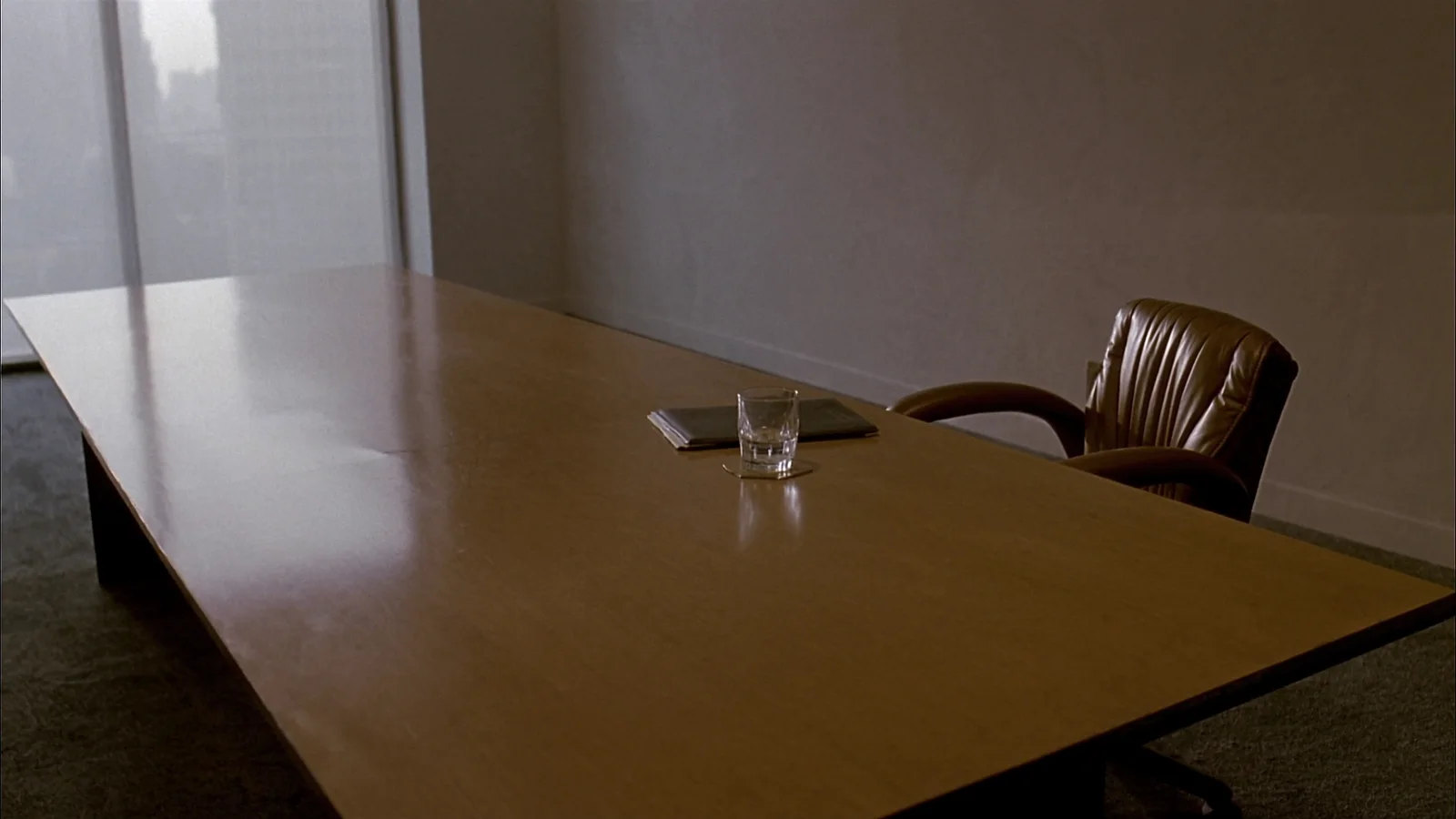
A deposition is testimony under oath, usually in a conference room, with your attorney beside you, the defense attorney asking questions, and a court reporter recording everything. There is no judge and no jury. Federal Rule of Civil Procedure 30(d)(1) presumptively limits a deposition to one day of seven hours, and most states apply a comparable cap; going past it requires a stipulation or a court order. In practice these commonly run a few hours. You will be asked about the abuse in detail, and you will also be asked about your history, covering treatment, relationships, employment and substance use, because the defense is testing whether your harm has other causes.
Some of those questions will feel invasive, because they are. What makes it survivable is preparation: you will know the categories in advance, you will have practiced, your attorney can object and can request breaks at any time, and protective orders under Rule 26(c), which limit who may see the transcript, are routine in these cases. You are allowed to say you do not remember. You are allowed to stop.
- Whether to file at all. A consultation commits you to nothing.
- Whether to accept any settlement offer. Your attorney cannot settle without your agreement.
- Whether to request anonymity, and to raise it before filing rather than after.
- Whether to talk to press. You are never obligated to.
- The pace at which you engage. Tell your attorney what you can and cannot do.
What it costs
The percentage rises with how far the case has to go. The firm advances filing fees, records charges and expert costs rather than billing you for them. Fee agreements genuinely differ on two points: whether costs come out before or after the percentage is calculated, and what happens to those advanced costs if there is no recovery. Ask about both. ABA Model Rule 1.5(c) requires a contingent fee agreement to be in writing and to say whether expenses are deducted before or after the fee is calculated. California puts its own version in Business and Professions Code section 6147.
What to gather (and what not to worry about)
Helpful if you have it
- Approximate dates and locations
- Names of anyone you told, at any time
- Therapy or medical records
- School, employment or military records
- Any prior report or complaint
Not required
- A police report
- The abuser’s name
- Exact dates
- Witnesses
- Physical evidence
- A continuous, gap-free account
Questions we are asked most
Nothing up front. These cases are handled on contingency: the firm advances filing fees, records costs, expert fees and litigation expenses, and is paid a percentage of any recovery. If there is no recovery, you owe no fee. Contingency percentages typically fall between one third and forty percent depending on the stage at which the case resolves. Ask for the fee agreement in writing and read the section on costs, which is separate from the fee.
Not usually, and almost never in the way people picture. The overwhelming majority of civil claims resolve without a trial. What you will likely face is a deposition: testimony under oath in a conference room, with lawyers present and a court reporter, not in a courtroom and not in front of a jury. Whether the defendant personally attends can often be addressed in advance, and protective arrangements are common in abuse cases.
Most survivors have no proof in the sense they mean: no police report, no photographs, no witnesses. Institutional cases are not built that way. They are built from the institution's own records: placement histories, personnel files, prior complaints about the same person or facility, transfer patterns, and regulatory findings. Your account establishes what happened to you; the institution's documents establish that it was foreseeable and that the institution failed to prevent it.
A straightforward individual case may resolve in one to two years. Institutional litigation, an MDL, or a bankruptcy claims process commonly runs three to five years or longer, and a bulk settlement's distribution phase can add years after the settlement itself is announced. Anyone promising you a fast resolution is either uninformed or selling something.
Not because of the filing itself, if you take steps to keep it that way. Many survivors proceed under a pseudonym, which keeps their name off the public docket. Discuss confidentiality in the first conversation, because it is far easier to protect at the outset than to recover after a name is already public. See our page on filing anonymously.
Yes. You can decline to file after a consultation, and you can generally instruct your attorney to dismiss a case you have filed, though the consequences of dismissing depend on timing and on whether it would be with or without prejudice. Nothing about a free case review commits you to anything.
It changes nothing about your rights today, except that the deadline has continued running in the meantime. Deciding not to pursue a claim at one point in your life does not waive it. What matters now is whether a deadline still permits filing, which is a question of dates, not of what you said years ago.
- Federal Rule of Civil Procedure 8: general rules of pleading
- Federal Rule of Civil Procedure 12(b)(6): motion to dismiss for failure to state a claim
- Federal Rule of Civil Procedure 26(c): protective orders
- Federal Rule of Civil Procedure 30(d)(1): a deposition is limited to one day of 7 hours unless stipulated or ordered
- ABA Model Rule of Professional Conduct 1.5(c): contingent fee agreements in writing, including how costs are deducted
- ABA Model Rule of Professional Conduct 1.2(a): the client decides whether to settle
- California Business and Professions Code section 6147: written contingency fee contracts (one state's rule)
- California Government Code 911.2, time to present claims Accurate as of October 5, 2026.
- California Government Code 905(m), as amended by AB 218 (Stats. 2019, ch. 861) Accurate as of October 5, 2026.
