
Every lawsuit page on this site is listed below, in two groups. The platform cases are against companies whose apps and services connected people. The institutional cases are against organizations that had children or adults in their care. Each entry gives the status as of the date shown and links the record behind it.
Platform cases: the four active fronts
Nobody in these cases claims a corporation committed an assault. The argument is narrower and harder to answer: that a company designed a system which put a stranger and a vulnerable person alone together, sold it on safety, and then declined to fix failures it already knew about.
Two things happened at roughly the same time and together made this category of litigation possible. Congress removed forced arbitration for sexual assault claims in 2021, in Pub. L. 117-90, and plaintiffs’ lawyers learned to frame platform cases around product design rather than user content. Everything in this section follows from those two developments.
MDL No. 3084 · N.D. Cal. · active
Uber sexual assault litigation
4,916 federal cases were pending on October 1, 2026, up from 3,940 on July 1, according to the Judicial Panel on Multidistrict Litigation’s October 1 report, plus a parallel California state coordinated proceeding (JCCP No. 5188). Uber won the first state trial on September 30, 2025, according to news reports. Federal juries found it liable in two 2026 bellwethers, including an $8.5 million Arizona verdict (Dean v. Uber, D. Ariz. No. 2:25-cv-04276). Uber has appealed the second, a $5,000 verdict in North Carolina, to the Fourth Circuit (notice of appeal, May 19, 2026). Uber said the jury was incorrectly instructed on liability, according to Fortune (April 21, 2026). Before that trial Judge Breyer ruled that Uber is a common carrier under North Carolina law, according to news reports, a question that reaches every gig platform. Uber denies the allegations.
MDL + state AG actions
Roblox
180 cases pending in the MDL on October 1, 2026, according to the Judicial Panel on Multidistrict Litigation’s report. Nevada announced a $12.5 million settlement in April 2026 with safety reforms attached (consent judgment, April 15, 2026), entered without any admission of wrongdoing; West Virginia reached $11 million on April 21, 2026. Roblox’s quarterly report says ten states had sued it as of July 30, 2026, and five had settled. Roblox denies the allegations.
State enforcement wave
Discord
Indiana sued Discord and Roblox on May 6, 2026 under its Deceptive Consumer Sales Act. Texas sued Discord on May 22, 2026, and the agreed temporary injunction of July 20, 2026 records that Discord admits no allegation. Arkansas sued both on June 11, 2026, in Los Angeles County Superior Court. Discord denies the allegations.
Individual and consolidated claims
Lyft
The same negligent-screening and failure-to-respond theories as the Uber litigation, in a different procedural posture and without a comparably sized federal MDL. Lyft denies liability in these cases.
If you are considering a claim
What filing involves
Deadlines in these cases are short compared with childhood abuse claims. If you are weighing whether to act, read this before deciding to wait.
Why the platform, and not just the person
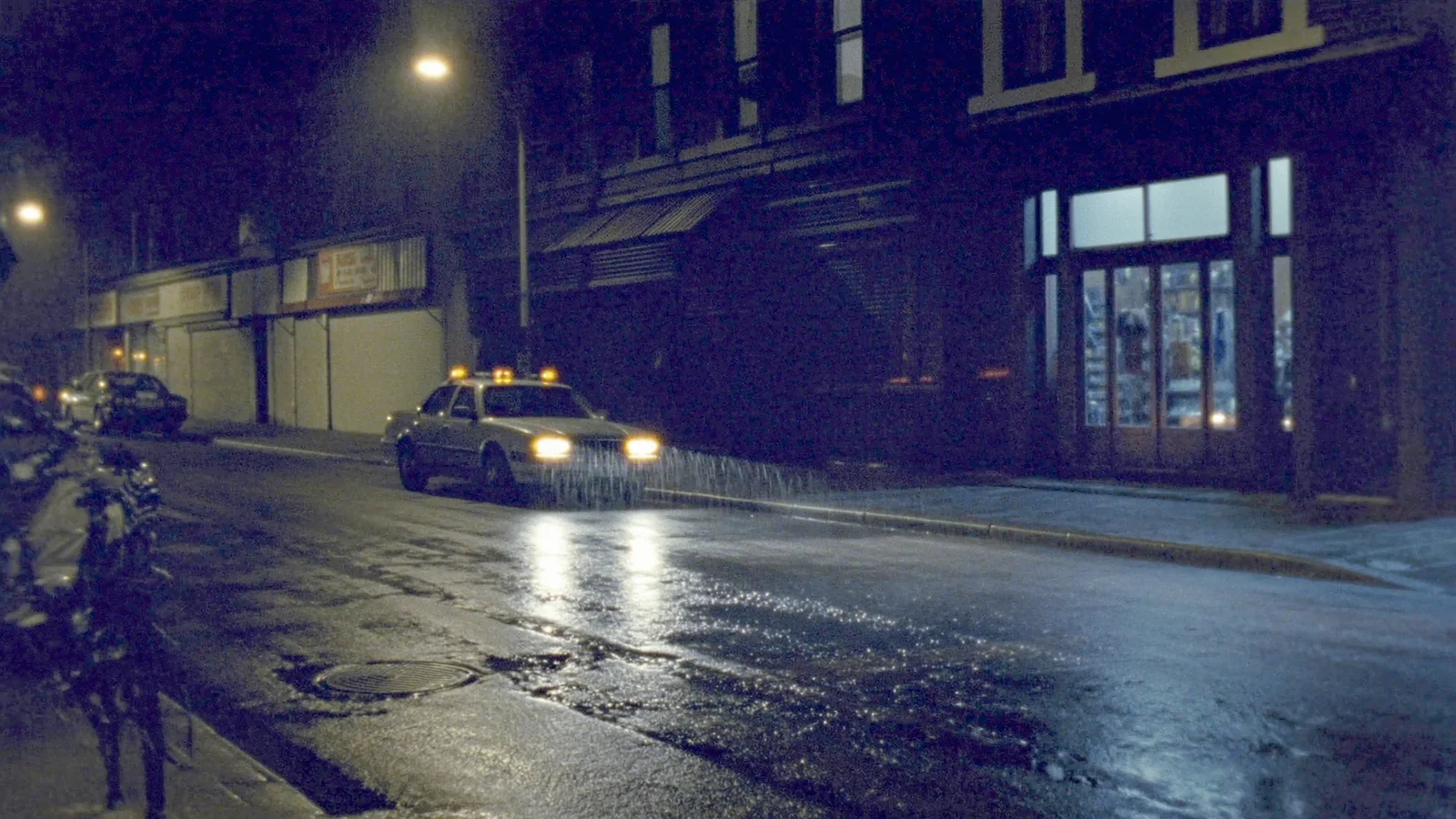
The individual who committed the assault is almost never a viable defendant. They may be unidentifiable, in prison, or without assets. The platform is different: it chose who to let onto the system, how to check them, how to match them with customers, what to do about complaints, and what to tell the public about safety.
The recurring allegations across all four cases are the same handful of decisions:
- Screening that did not screen. Name-based background checks instead of fingerprinting; self-declared ages with nothing verifying them.
- Complaints that led nowhere. Reports about a specific driver or user that allegedly did not result in removal, allowing the same person to continue.
- Design that creates the risk. A private car at night with a stranger; a private message channel between an adult and a child. Both are configurations the company controls entirely.
- Safety marketing. Public assurances that plaintiffs allege did not match internal knowledge.
- Structure used as a shield. Independent contractor classification, or the argument that the company is only a conduit for what users do.
Two shifts that changed everything
The end of forced arbitration for these claims
For two decades, the arbitration clause in a platform’s terms of service was the first and often the last obstacle. Arbitration is private, individual, and generally far less favorable to claimants than a jury. The Ending Forced Arbitration of Sexual Assault and Sexual Harassment Act of 2021, codified at 9 U.S.C. § 402, gives a claimant asserting sexual assault or harassment the right to reject a pre-dispute arbitration agreement and proceed in court. That single change is why thousands of these cases exist in courtrooms at all.
The common carrier question
A common carrier, meaning a business that transports the public for hire, owes passengers the highest duty of care, and that duty is non-delegable. It cannot be handed off to a contractor. Before the North Carolina bellwether, Judge Breyer ruled that Uber qualifies under that state’s law, according to news reports (the order, Pretrial Order No. 43 of April 10, 2026, is listed on the MDL docket), and Uber has appealed the verdict that followed. If that holding survives, the contractor-classification shield that underpins the entire gig economy stops working for passenger safety. If it does not, the plaintiffs fall back on ordinary negligence, which is a heavier lift. See our detailed explanation on the Uber page.
Childhood abuse claims often benefit from delayed-discovery rules and revival windows measured in decades. Adult sexual assault claims usually do not. In most states they run on a personal injury or sexual assault limitations period measured in a small number of years from the assault itself. If a rideshare or platform assault happened to you as an adult, waiting is genuinely costly. Check your state on our deadline reference.
Institutional cases
These cases are brought against the organization that ran the program, the facility or the placement, not only against the person accused of the abuse. Many are resolved in bulk, through a county settlement, a state claims fund or a bankruptcy plan. A settlement or a confirmed plan resolves claims for money. It is not a court finding about what happened, and each case page states the defendant’s position.
Bankruptcy trust · plan final
Boy Scouts of America
The Supreme Court declined on January 12, 2026 to hear the last challenge to the plan, which the Third Circuit describes as funded with about $2.48 billion. As of September 29, 2026 the trust pays 4.7% of each allowed claim amount, pending a bankruptcy court ruling on the percentage.
Revival windows & Chapter 11
Catholic dioceses
Revival windows reopened claims that deadlines had closed, and dioceses answered with Chapter 11. A bankruptcy bar date can close a claim long before the state’s own deadline would have.
County settlements · AB 218
LA County juvenile facilities
The Board of Supervisors approved $4 billion for about 6,800 claims on April 29, 2025, and up to $828 million for about 414 more on October 28, 2025. The $4 billion is paid over five fiscal years beginning in FY 2025-26, under the payment plan adopted May 13, 2025.
DCFS placements
LA County foster care
Foster care claims against the County fall under the same two settlements as the juvenile halls, which the County said in its April 4, 2025 announcement cover claims dating back to 1959.
State-by-state tracker
Juvenile facility lawsuits by state
Cases in 16 states and D.C. as of October 2026. New Jersey’s coordinated litigation over its state facilities, MCL 641, listed 284 cases on May 19, 2026.
State claims fund · closed to new claims
New Hampshire YDC
The State’s settlement fund stopped accepting claims after June 30, 2025, under RSA 21-M:11-a. As of May 31, 2026 the administrator reported 2,269 claims filed, 425 settled and 1,689 pending.
Federal prison · consent decree
FCI Dublin
A consent decree approved February 27, 2025 runs to March 31, 2027 unless the court ends it earlier. The U.S. Attorney’s Office said on May 1, 2026 that ten employees had been charged and nine had pleaded guilty or been convicted at trial.
No time limit since 2023
Maryland Child Victims Act
The Supreme Court of Maryland upheld the 2023 Act, which removed the time limit for child sexual abuse suits, on February 3, 2025. It hears the State’s immunity appeal in State of Maryland v. J.C. on November 9, 2026.
Six Chapter 11 cases
California diocese bankruptcies
Six California Catholic dioceses are in Chapter 11, and no plan had been confirmed in any of them as of October 5, 2026. On October 2, 2026 the bankruptcy court declined to confirm the Oakland diocese’s plan.
Institution type
Prisons and jails
A claim over abuse in a federal prison goes against the United States and must be presented to the Bureau of Prisons within two years under 28 U.S.C. § 2401(b). The Prison Rape Elimination Act gives no private right to sue, as the Fifth Circuit held in Krieg v. Steele on April 15, 2015.
For the places these cases come from, see institutions and juvenile detention. High-profile individual defendants are followed separately in the case tracker.
The deadlines described here are general rules, and most of them have exceptions. The date that governs a particular claim turns on the state, the person’s age when the abuse happened, when they connected it to the harm it caused, and who the defendant is. A claim against a public agency or a public school can carry a written notice requirement that runs out long before the ordinary deadline.
Nothing on this page can tell you your own date. A lawyer who looks at your facts can, and there is no charge to ask.
Questions we are asked most
Because the claim is about the company's own conduct, not the perpetrator's. The theory is that the company designed a system that predictably placed a vulnerable person alone with a stranger it recruited, marketed that system as safe, and then made decisions about screening, monitoring and response that were unreasonable given what it knew. That is ordinary negligence law applied to a new business model.
It is a serious defense but not an automatic one. Section 230 protects a platform from being treated as the publisher of user content. Plaintiffs therefore build claims around the platform's own design choices, such as age verification, default privacy settings, matching and recommendation systems, moderation staffing, and safety representations to parents, rather than around anything a user said. Courts have divided on exactly where that line falls, and it is currently the central question in this area.
Often not, and the reason is a specific federal statute. The Ending Forced Arbitration of Sexual Assault and Sexual Harassment Act of 2021 gives a person asserting a sexual assault or harassment claim the right to reject a pre-dispute arbitration agreement and go to court instead. It applies to claims that arose or accrued on or after March 3, 2022, and a court, not an arbitrator, decides whether it applies.
No. A report helps but is not required, and a great many of these claims involve none. Platform cases are unusually well documented in evidentiary terms because the company recorded almost everything: trip data, GPS traces, account records, in-app messages, and prior complaints about the same person. Much of that sits inside the company's systems and is obtained through discovery.
The bankruptcy court sets a bar date, a deadline for filing a claim in that case, and it can fall long before your state's own deadline. The Boy Scouts bankruptcy moved more than 80,000 claims into one settlement trust. In the six California Catholic diocese cases, the bar date had passed in all six as of October 2026, the most recent on February 2, 2026 in Fresno, although a court can allow a late claim on motion.
- Judicial Panel on Multidistrict Litigation, pending actions by MDL, October 1, 2026 (MDL No. 3084: 4,916 pending) and July 1, 2026 (3,940 pending).
- Dean v. Uber Technologies, D. Ariz. No. 2:25-cv-04276, docket: verdict February 5, 2026; $8,500,000 judgment entered February 6, 2026.
- WHB 823 v. Uber Technologies, W.D.N.C. No. 3:25-cv-00737, notice of appeal, May 19, 2026 (4th Cir. No. 26-1640).
- In re Uber Technologies, Inc., Passenger Sexual Assault Litigation, MDL No. 3084 (N.D. Cal.), Pretrial Order No. 43, April 10, 2026 (ruling as reported in the news; order not reviewed).
- AboutLawsuits, first JCCP No. 5188 trial verdict, October 1, 2025 (news reporting).
- Ending Forced Arbitration of Sexual Assault and Sexual Harassment Act of 2021, Pub. L. 117-90, codified at 9 U.S.C. § 402.
- 47 U.S.C. § 230 and its application to product-design claims.
- JPML pending actions by MDL, August 3, 2026 (Roblox, MDL No. 3166).
- State of Nevada v. Roblox Corporation, Clark County District Court No. A-26-944136-B, consent judgment, April 15, 2026.
- West Virginia Attorney General, Roblox settlement, April 21, 2026.
- Roblox Corporation, Form 10-Q for the quarter ended June 30, 2026 (state suits and settlements as of July 30, 2026).
- State of Indiana v. Roblox Corp. and Discord Inc., Hamilton Superior Court 1 No. 29D01-2605-PL-005581, complaint, May 6, 2026.
- State of Texas v. Discord Inc., Collin County No. 199-03546-2026, petition, May 22, 2026, and agreed temporary injunction, July 20, 2026.
- State of Arkansas v. Roblox Corporation and Discord Inc., complaint filed June 11, 2026.
- In re Boy Scouts of America, 3d Cir. No. 23-1664, opinion, May 13, 2025; Supreme Court No. 25-490, certiorari denied January 12, 2026; Scouting Settlement Trust update, September 29, 2026.
- Los Angeles County Board of Supervisors, statement of proceedings, April 29, 2025, Item 11; October 28, 2025, Item 6; County Counsel payment plan, adopted May 13, 2025; County announcement, April 4, 2025.
- New Jersey Courts, MCL 641 case list, May 19, 2026.
- New Hampshire RSA 21-M:11-a; YDC Claims Administration and Settlement Fund, report for May 2026.
- California Coalition for Women Prisoners v. Federal Bureau of Prisons, N.D. Cal. No. 4:23-cv-04155-YGR, Dkt. 473, February 27, 2025; U.S. Attorney’s Office, N.D. Cal., release of May 1, 2026.
- Supreme Court of Maryland, Roman Catholic Archbishop of Washington v. Doe, February 3, 2025; November 2026 argument schedule.
- In re Roman Catholic Bishop of Oakland, No. 23-40523, memorandum decision on plan confirmation, Dkt. 3548, October 2, 2026; In re Roman Catholic Bishop of Fresno, No. 25-12231, case site.
- 28 U.S.C. § 2401(b); Krieg v. Steele, No. 13-11402 (5th Cir. April 15, 2015) (unpublished).
- The Schroeder Firm, rideshare assault practice.
Each figure is accurate as of the date given beside it. Uber, Lyft, Roblox and Discord deny the allegations made against them.
