
The Boy Scouts case is the clearest demonstration in modern American law of what bankruptcy does to abuse claims. It converted 82,209 abuse claims into a single administrative process, set one deadline that overrode every state statute of limitations in the country, and extinguished claims against organizations that never filed for bankruptcy at all. It is the template for anyone with a claim against an institution that might follow the same path.
Status at a glance
Final · distributions ongoingWho may be able to file
The trust is closed to new claims. Survivors who filed a proof of claim by the bankruptcy bar date are the trust’s claimants, and their claims are worked through the trust’s own procedures rather than in court. Under the plan’s Trust Distribution Procedures there were four ways to be paid: an expedited distribution, evaluation under the claims matrix, a tort system alternative that lets a dissatisfied claimant have the trust’s figure reviewed by a court, and an independent review option for higher-value claims (Third Circuit opinion, May 13, 2025).
A survivor who did not file by the bar date generally cannot now reach the trust or any party the plan released. The plan does not release everyone. In its Supreme Court brief, BSA states that “no perpetrator of abuse is released by the Plan,” and whether a particular organization was released, and how far, turns on the plan’s terms. That is a question an attorney should check against the documents before anyone gives up on a claim. Our guide to what filing involves explains the first steps, and a confidential case review costs nothing.
Deadlines that apply
The deadline that decided this case was the bar date. BSA filed for Chapter 11 on February 18, 2020, and the bankruptcy court set November 16, 2020 as the date by which every prepetition creditor, abuse claimants included, had to file a proof of claim. Over 100,000 proofs of claim were filed by then, of which 82,209 were unique and timely abuse claims (Third Circuit opinion, May 13, 2025).
That one date applied nationwide and overrode every state’s statute of limitations, including revival windows that would otherwise have stayed open for years. The independent review option carried a deadline of its own: a claimant had to seek it within six months of the plan’s April 19, 2023 effective date. Our statute of limitations reference explains the state rules that a bankruptcy bar date displaces.
The deadlines described here are general rules, and most of them have exceptions. The date that governs a particular claim turns on the state, the person’s age when the abuse happened, when they connected it to the harm it caused, and who the defendant is. A claim against a public agency or a public school can carry a written notice requirement that runs out long before the ordinary deadline.
Nothing on this page can tell you your own date. A lawyer who looks at your facts can, and there is no charge to ask.
How the case reached bankruptcy
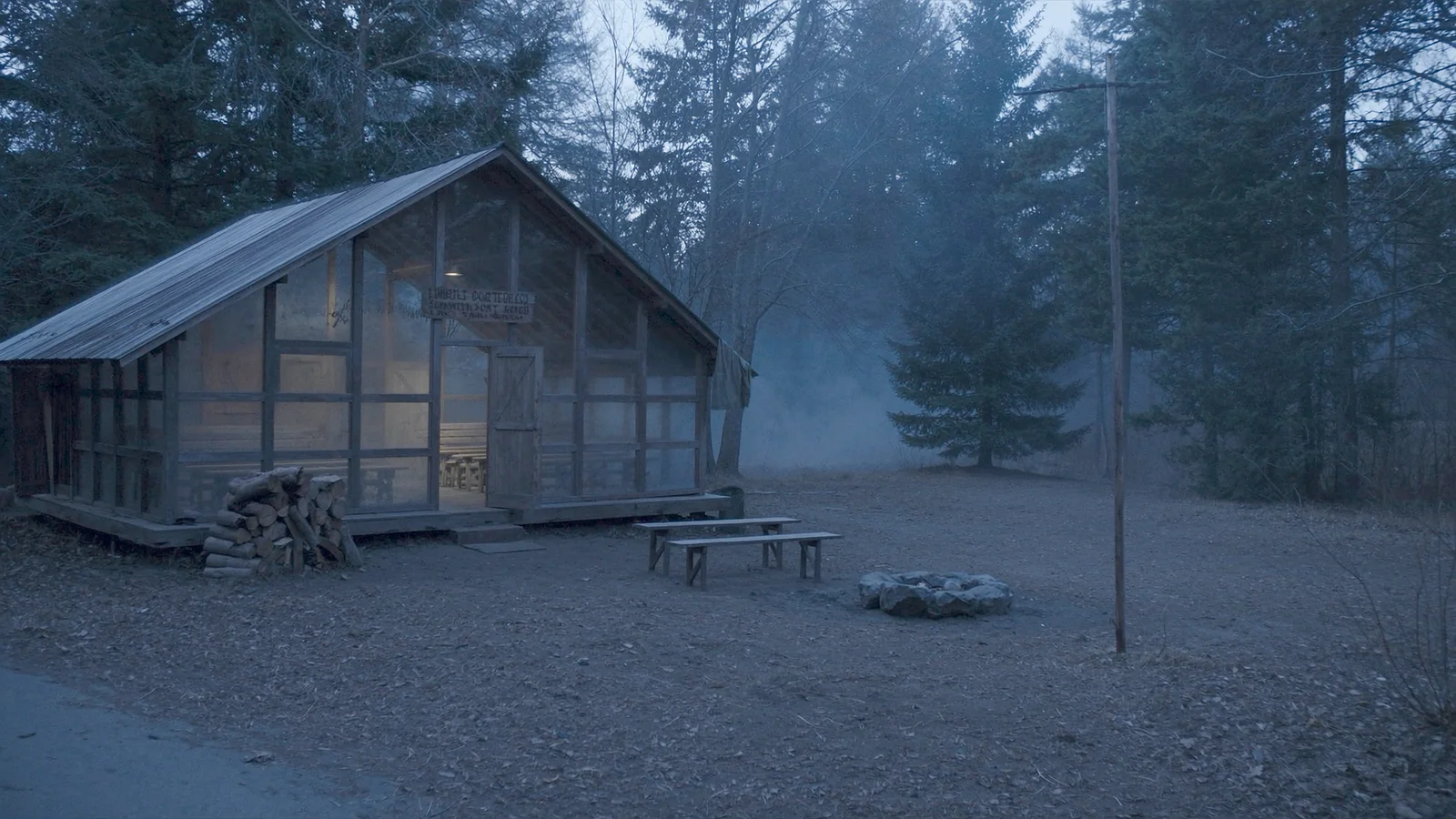
The claims allege sexual abuse of children in Scouting programs and that the organizations responsible for those programs failed to protect them. They are allegations, resolved through the trust’s claims process rather than at trial.
The Boy Scouts of America maintained internal files on volunteers suspected of abusing children. Those records were kept for decades and known internally by a name that became publicly notorious once they were unsealed. Their existence established something that is normally the hardest thing to prove in an institutional case: the organization had contemporaneous knowledge, in writing, over a long period.
As states began passing revival windows in the late 2010s, claims that had been legally dead for decades became filable all at once. The Third Circuit records that BSA resolved about 250 abuse claims for approximately $150 million between 2017 and 2019, and that by 2019 it had become apparent BSA could not keep defending the claims one case at a time. The volume that resulted was beyond what the organization could absorb, and in February 2020 it filed for Chapter 11.
Bankruptcy did three things immediately. It froze every pending lawsuit. It set a single nationwide bar date by which every claimant had to file. And it moved the entire dispute out of the state courts where abuse cases are normally tried and into one federal bankruptcy court in Delaware.
The third-party release fight
The Boy Scouts of America is a national organization, but Scouting on the ground was run by about 250 local councils and sponsored by chartering organizations: churches, schools, civic clubs, and veterans’ posts. Those entities are legally distinct from the national body, and many of them had their own liability and their own insurance.
None of them filed for bankruptcy. But the plan released them anyway.
The bargain was straightforward: local councils, chartering organizations, and insurers contributed a large share of the $2.48 billion, and in exchange received releases extinguishing survivors’ claims against them. The largest piece, more than $1.6 billion according to the Third Circuit, came from the insurers buying their policies back from BSA. Without those contributions the trust would have been dramatically smaller. Without the releases, the contributions would not have come: the bankruptcy court found, in the words BSA quotes in its Supreme Court brief, that “without the Scouting-Related Releases, the Settling Insurers would not settle their liability.”
For a survivor whose abuse happened at a troop sponsored by a large, well-insured institution, the third party may have been the deeper pocket, and in some states the defendant against whom the claim was strongest. A release converts that potentially substantial individual claim into a scaled share of a collective trust. The 75 objecting survivors argued that a bankruptcy court has no authority to do that to parties who never sought its protection.
Their argument gained force in June 2024, when the Supreme Court held in Harrington v. Purdue Pharma L.P., 603 U.S. 204, that the Bankruptcy Code does not authorize releases of this kind without the claimants’ consent. By then the Boy Scouts plan had been in effect for over a year. On May 13, 2025 the Third Circuit dismissed the survivors’ appeals without deciding whether the releases were lawful. It held that section 363(m) of the Bankruptcy Code, which protects a court-approved sale to a good-faith buyer that was not stayed pending appeal, barred the relief they sought, because undoing the plan would undo the insurers’ purchase of their policies.
What the Supreme Court did in January 2026
It declined to hear the case. That is worth stating precisely, because denial of certiorari is routinely misreported as an endorsement. It is not. The Court decides a small fraction of the petitions it receives, and a denial carries no ruling on whether the decision below was right. The petition, Lujan Claimants v. Boy Scouts of America, No. 25-490, was filed on October 14, 2025 and denied on January 12, 2026.
What it does carry is finality. With review denied, the plan and its releases stand, the appeal is over, and no further challenge is available. For claimants that removes the last source of uncertainty hanging over the trust, and for the objectors it ends the effort to preserve claims against councils and chartering organizations.
How the trust pays claims
The Scouting Settlement Trust does not pay claims the way a jury pays a verdict. It runs a matrix.
- Tier assignment. Each claim is categorized by the nature and severity of the abuse alleged, in one of the matrix’s six tiers, producing a base value.
- Adjustments. Duration, the claimant’s age, corroboration, documented consequences, and the applicable state’s law all move the value up or down. The plan calls these scaling factors, and they place a claim within its tier’s range.
- Payment percentage. The total of all allowed claims exceeds the trust’s assets. The trust therefore pays each allowed claim at a percentage reflecting what it can actually pay.
- Distribution over time. Payments are made as insurance recoveries and contributions are realized, a process measured in years.
The payment percentage is why headline settlement numbers mislead. A $2.48 billion trust divided among more than 80,000 claims does not produce the per-claim figures that the total suggests, and the trust cannot pay more than it holds no matter what a claim is worth on paper. For now it pays 4.7% of each allowed claim amount, pending a bankruptcy court ruling on the percentage. According to the trustee’s update of September 29, 2026, the court heard the question on June 15 and 16, 2026, and second distributions are under way.
The trust has been paying since the plan took effect. In its December 4, 2025 brief, BSA reported, citing the trust, that the trustee had determined 49,432 abuse claims and distributed $295.5 million to 36,896 survivors. Those are BSA’s figures as of late 2025, not a court finding. Our guide to how settlements are actually paid explains trusts, matrices and payment percentages in general terms.
The lesson for other institutions
The Boy Scouts case is now the template. Any institution facing mass abuse claims, whether a diocese, a school system, or a youth organization, has watched this play out and understands the options. It is the reason our Catholic diocese page spends as much time on bankruptcy as it does on liability.
For an individual survivor the operative consequence is timing. A statute of limitations gives you years and sometimes decades. A bankruptcy bar date can give you months, it applies regardless of your state’s law, and missing it is generally unrecoverable. If the institution that harmed you is in financial difficulty, waiting is the one thing that reliably costs you the claim.
Update log
The Supreme Court declined on January 12, 2026, to hear a challenge to the Boy Scouts of America bankruptcy plan brought by 75 survivors, leaving the plan in place. The Scouting Settlement Trust, funded with about $2.48 billion, continues paying claims, for now at 4.7% of each allowed claim amount.
Questions we are asked most
Not into the trust. The bankruptcy court set November 16, 2020 as the bar date, and claims not filed by that deadline were generally extinguished when the plan was confirmed, whatever your state's statute of limitations allows. If you did not file by the bar date, an attorney should still review whether any defendant not released by the plan remains available to you, but the trust itself is closed to new claims.
On January 12, 2026 the Court declined to hear the appeal, Lujan Claimants v. Boy Scouts of America, No. 25-490. That is not a ruling on the merits. It leaves the lower court decisions in place and ends this challenge. The practical effect is that the $2.48 billion plan, including its releases of non-debtor parties, is final and no longer subject to challenge.
Their objection was to the third-party releases. The plan resolves claims not only against the Boy Scouts of America but also against local councils, chartering organizations such as churches and civic groups, and insurers, none of which filed for bankruptcy. The objectors argued that a bankruptcy court cannot wipe out claims against parties that never sought its protection. The Third Circuit dismissed their appeals on May 13, 2025 without deciding that question, holding that section 363(m) of the Bankruptcy Code barred undoing the insurers' purchase of their policies, and the Supreme Court declined to hear the case.
The trust places each claim in one of six matrix tiers, and the plan's scaling factors set where within that tier's range the claim falls. The trust then pays a percentage of each allowed claim amount, because allowed claims exceed what it holds. As of the trustee's September 29, 2026 update that percentage is 4.7%, pending a bankruptcy court ruling. This site does not estimate what any individual claim is worth.
Generally no, if that organization was released under the plan. That is exactly what the objecting survivors were fighting about, and the releases are now final following the Supreme Court's January 12, 2026 refusal to hear the case. The plan does not release everyone: BSA's Supreme Court brief states that no perpetrator of abuse is released, and whether a particular organization was released turns on the plan's terms, which an attorney should check.
Years, not months. The plan took effect on April 19, 2023, and as of the trustee's September 29, 2026 update second distributions were under way. The trust must review each claim, apply the matrix, resolve disputes, and collect the insurance money that funds much of the total, so claimants should expect interim rather than lump-sum payments.
Related states and institutions
The Catholic dioceses page follows the other large group of abuse claims now being decided in bankruptcy courts, diocese by diocese. Every institutional matter this site tracks is listed on the institutions hub, and every active case on the lawsuits index. For the rules behind the timing questions on this page, see statute of limitations by state; for how payment works, settlements and compensation. How this site checks pages like this one is described on our editorial process page.
- In re Boy Scouts of America, Third Circuit No. 23-1664, opinion (May 13, 2025) Accurate as of May 13, 2025.
- Supreme Court of the United States, docket No. 25-490, Lujan Claimants v. Boy Scouts of America (certiorari denied January 12, 2026) Accurate as of January 12, 2026.
- Brief for the Scouting Respondents in Opposition, No. 25-490 (December 4, 2025): petitioners are 75 survivors Accurate as of December 4, 2025.
- Harrington v. Purdue Pharma L.P., 603 U.S. 204 (2024) Accurate as of June 27, 2024.
- Scouting Settlement Trust, trustee update (September 29, 2026) Accurate as of September 29, 2026.
