
For years the standard advice to a survivor with a thirty-year-old claim was that even if a revival statute technically allowed the filing, no jury would credit it and no appellate court would let it stand. This case is why that advice is no longer honest.
Status at a glance
Appeals endedWhat actually happened
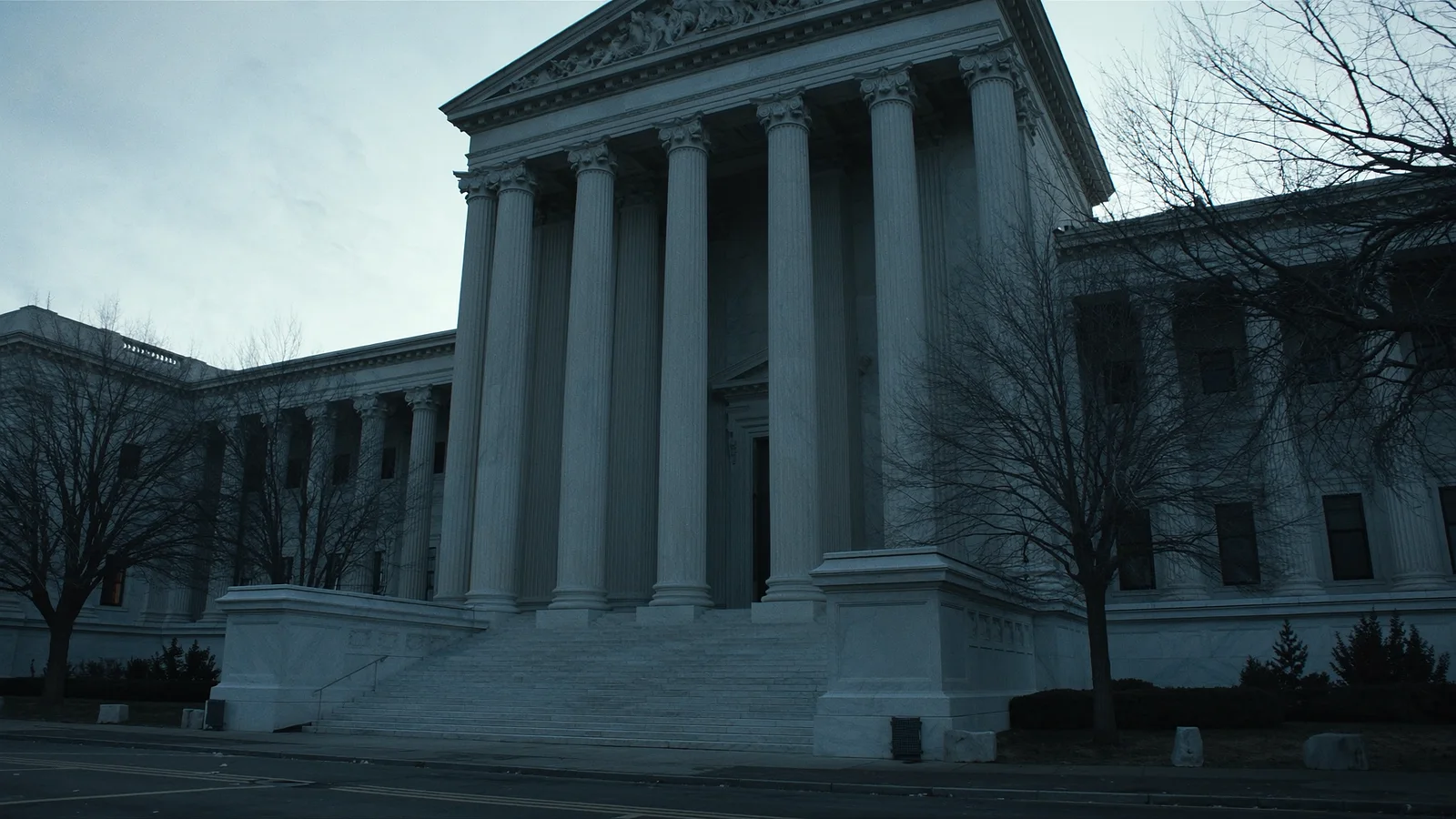
E. Jean Carroll, who was an advice columnist for Elle magazine in 1996, sued Donald J. Trump in federal court in Manhattan on November 24, 2022, minutes after New York’s Adult Survivors Act window opened (Second Circuit opinion, No. 23-793). She alleged that he assaulted her in a dressing room at the Bergdorf Goodman department store in 1996, and that statements he made on October 12, 2022 defamed her. Before the Act, a claim over a 1996 assault had long been time-barred.
The case went to trial on April 25, 2023, before Judge Lewis A. Kaplan. On May 9, 2023 a unanimous nine-person jury found that Trump sexually abused Carroll in 1996 and defamed her in 2022. It also found that she had not proven he “raped” her as New York law defined the term, and it awarded $5 million in total: $2 million in compensatory and $20,000 in punitive damages on the sexual abuse claim, and $2.7 million in compensatory and $280,000 in punitive damages on the defamation claim (Second Circuit opinion, citing the verdict form). Judgment was entered on May 11, 2023.
This is a civil finding of liability, reached on the civil standard of proof. It is not a criminal conviction. It is a jury verdict that the courts have upheld. Our guide to civil and criminal cases explains how the two differ. Trump did not testify at trial and has denied the allegations and the defamation, as the Second Circuit noted.
Procedural history
For one year, adults who had been sexually assaulted could file civil claims regardless of how long ago the assault occurred, and regardless of whether the ordinary limitations period had expired (CPLR § 214-j). Carroll filed on the first day, November 24, 2022.
The claim, which concerned conduct decades earlier, was tried to a jury in federal court in New York, which found for the plaintiff on sexual abuse and defamation. Judgment followed on May 11 (Second Circuit opinion).
Judge Kaplan denied Trump’s motion for a new trial in a 59-page opinion, and Trump amended his notice of appeal the same day (Second Circuit opinion).
A panel of Judges Chin, Carney and Pérez rejected each challenged evidentiary ruling and held that Trump had not shown any error affected his substantial rights (No. 23-793).
The date of the Second Circuit’s denial is recorded on the Supreme Court docket.
Trump asked the Supreme Court to review the Second Circuit’s decision (No. 25-573).
The Court denied Trump’s petition for rehearing, filed July 8, 2026 (No. 25-573). That ends the appeals in this case.
The separate $83.3 million judgment
Carroll’s first suit is a different case and is not over. She sued in New York state court in 2019 over statements Trump made in June 2019, while he was President, and the case moved to federal court in Manhattan in September 2020 as Carroll v. Trump, No. 20-cv-07311 (LAK). It was delayed for years by questions of presidential immunity and whether the United States could be substituted as the defendant (Second Circuit opinion, No. 23-793). That case did not claim damages for the assault itself, which only became possible once the Adult Survivors Act window opened.
It was tried in January 2024. The jury awarded $18.3 million in compensatory and $65 million in punitive damages, a total of $83.3 million, and judgment was entered on February 8, 2024 (petition in No. 26-141). The Second Circuit affirmed on September 8, 2025 in No. 24-644 and denied rehearing on April 29, 2026. Two petitions asking the Supreme Court to review that judgment were filed on July 28, 2026: No. 26-141, brought by Trump, and No. 26-142, brought by the United States. Carroll’s responses to both are due October 30, 2026. Until the Court acts on them, that judgment is not final, and nothing on this page should be read as saying it is.
What it established in practice
What this case leaves behind is a public demonstration that a decades-old claim, revived by statute, can be filed, tried, won, and upheld. None of this is binding precedent for most survivors. It is a district court judgment affirmed within one circuit, and no court elsewhere is required to follow it. Its importance is of a different kind.
- Revival statutes work when tested. The window was used, the case was filed within it, and the resulting judgment withstood every challenge including a certiorari petition and a petition for rehearing (No. 25-573).
- Juries will credit decades-old accounts. The most common defense theory in these cases is that memory that old cannot support a verdict. A jury disagreed, in a public trial, about events 27 years earlier.
- A determined defense did not change the outcome. Trump contested the verdict through a new-trial motion, an appeal, a petition for rehearing in the Second Circuit, a certiorari petition and a petition for rehearing in the Supreme Court. Each failed.
- A denial of certiorari ends things. Worth stating clearly because it is routinely misreported: the Court did not endorse the decision below. It declined to review it, which is a different thing with the same practical effect.
Carroll sued under her own name. That is a choice, not a requirement, and our guide to filing anonymously explains when a court will let a survivor proceed under a pseudonym. The rest of our case tracker follows the other high-profile matters, each with its status stated the same way: verdict, settlement, charge or allegation.
The revival window behind the case
New York’s Adult Survivors Act, CPLR § 214-j, revived civil claims by adults over sexual offenses whose limitations periods had already run. The statute allowed those claims to be filed no earlier than six months and no later than one year and six months after it took effect, which made the window one year long. It opened on November 24, 2022 and has closed. It was the adult counterpart to the state’s earlier Child Victims Act, CPLR § 214-g, which opened a revival window for abuse suffered before age 18.
The window that made this case possible has closed. Others are open right now, and legislatures keep enacting new ones. Revival windows are deliberately time-limited, and that is the entire design, so whether one is available to you is a question with an expiry date. Check your state on our deadline reference.
The deadlines described here are general rules, and most of them have exceptions. The date that governs a particular claim turns on the state, the person’s age when the abuse happened, when they connected it to the harm it caused, and who the defendant is. A claim against a public agency or a public school can carry a written notice requirement that runs out long before the ordinary deadline.
Nothing on this page can tell you your own date. A lawyer who looks at your facts can, and there is no charge to ask.
Update log
The Supreme Court denied Donald Trump's petition for review of the 2023 Carroll verdict on June 29, 2026, and denied rehearing on August 17, 2026. That ends the appeals of the $5 million judgment. A separate $83.3 million defamation judgment is still before the Court.
Questions we are asked most
It declined to hear the appeal in Trump v. Carroll, No. 25-573, on June 29, 2026, and denied rehearing on August 17, 2026. A denial of certiorari is not a ruling on the merits. The Court reviews only a small fraction of the petitions it receives and a denial says nothing about whether the decision below was correct. What it does is end the appeals in this case: the 2023 verdict and the $5 million judgment stand.
No. That judgment comes from Carroll's first suit, over statements Trump made in 2019, and a jury awarded it in January 2024. The Second Circuit affirmed it on September 8, 2025, and petitions asking the Supreme Court to review it, Nos. 26-141 and 26-142, were filed on July 28, 2026. Responses are due October 30, 2026.
New York's Adult Survivors Act, CPLR 214-j, opened a one-year window on November 24, 2022 in which adults who had been sexually assaulted could file civil claims regardless of how long ago the assault occurred and regardless of whether the ordinary limitations period had run. It was the adult counterpart to the state's earlier Child Victims Act, CPLR 214-g.
Because of that window. The underlying claim, over an assault Carroll alleged took place in 1996, had been time-barred under New York's ordinary limitations period for decades. The Adult Survivors Act revived it for a defined period, the claim was filed within that period on November 24, 2022, and it proceeded to a jury trial like any other civil case.
Not as binding precedent in most courts, because it is a district court judgment affirmed on appeal within one circuit. Its significance is demonstrative rather than doctrinal. It established, publicly and against a defendant who contested it at every level, that a decades-old revived claim can be filed, survive every procedural challenge, be tried to a jury, win, and hold up through the full appellate process. Before this case, defense counsel routinely argued that such claims were unprovable in practice.
Some are open, some are closing, and some have already closed permanently. New York's Adult Survivors Act window has passed. Other states have windows open now, and legislatures continue to enact new ones. Because these windows are time-limited by design, the only reliable way to know your position is to check the current status for your state on our statute of limitations page, then confirm it with counsel.
- Supreme Court of the United States, docket No. 25-573, Trump v. Carroll (certiorari denied June 29, 2026; rehearing denied August 17, 2026) Accurate as of August 17, 2026.
- Supreme Court of the United States, docket No. 26-141, Trump v. Carroll (petition filed July 28, 2026) Accurate as of October 5, 2026.
- Supreme Court of the United States, docket No. 26-142, United States v. Carroll (petition filed July 28, 2026) Accurate as of October 5, 2026.
- U.S. Court of Appeals for the Second Circuit, Carroll v. Trump, No. 23-793, opinion affirming the 2023 judgment (December 30, 2024) Accurate as of December 30, 2024.
- Petition for a writ of certiorari, Trump v. Carroll, No. 26-141 (July 28, 2026): the 2024 jury award and the Second Circuit's decision in No. 24-644 Accurate as of July 28, 2026.
