This is not one lawsuit. It is thousands of individual claims, filed mostly under a California law that briefly reopened expired childhood sexual abuse cases, consolidated and resolved in bulk by a county that decided it could not defend them one by one. That structure explains almost everything about how the settlement behaves, including why the money is moving so slowly and why new claims are still being filed against a county that has supposedly already settled.
Case status: Los Angeles County juvenile & foster care claims
Settled · paying outWhat the claims describe
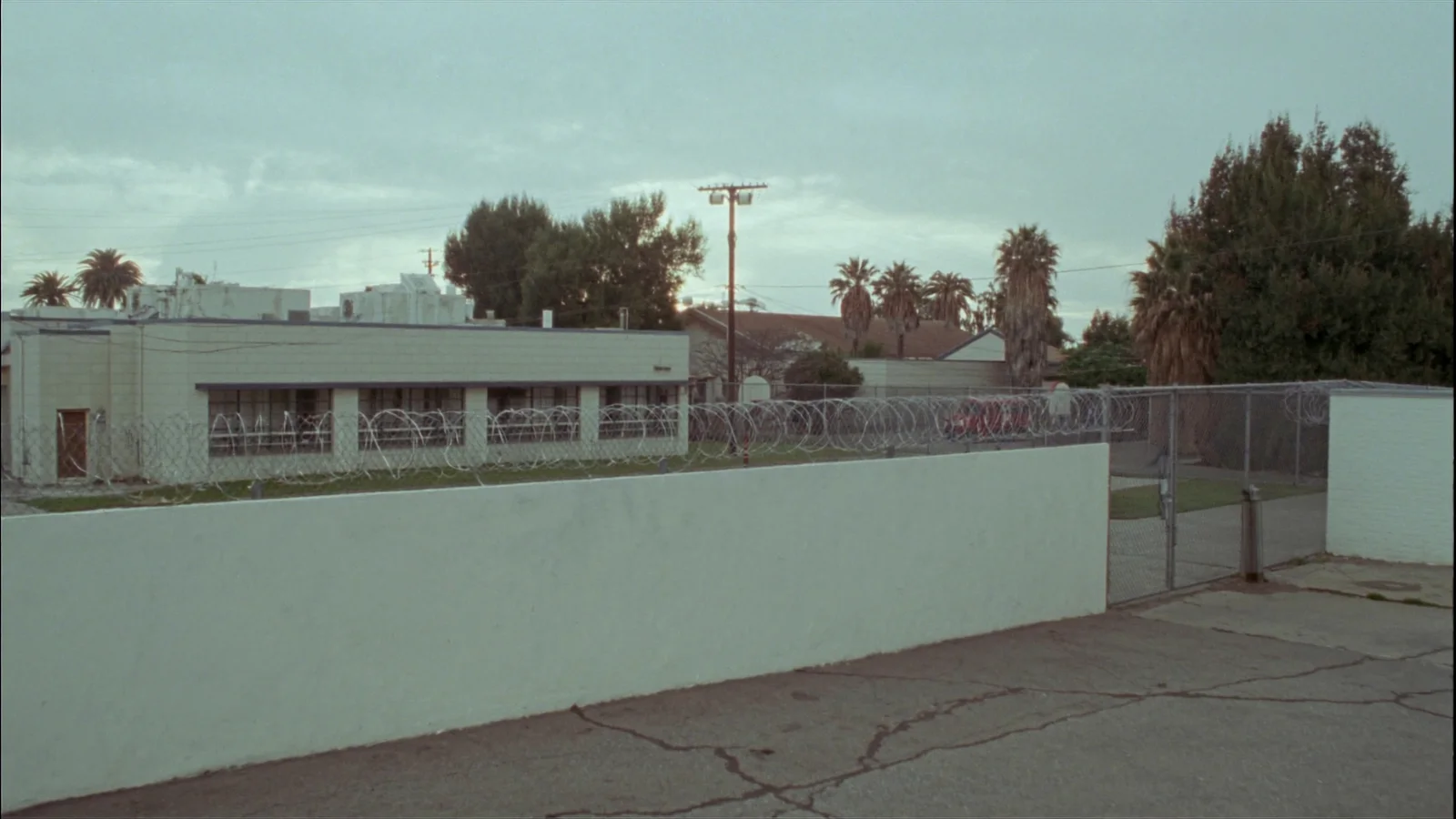
The allegations span more than six decades and two separate County systems: the Probation Department, which ran the juvenile halls and probation camps, and the Department of Children and Family Services, which placed children in foster and group homes. The pattern described across thousands of claims is remarkably consistent.
Children were held or placed in facilities where a small number of adults had near-total control over food, sleep, phone access, discipline, visitation, and release recommendations. Complaints, when they were made at all, went to supervisors inside the same institution. Staff accused of misconduct were frequently moved to another unit or another facility rather than removed. Records that would have documented complaints were incomplete, destroyed on retention schedules, or never created.
Many claimants were in County custody precisely because no adult outside the system was reliably advocating for them. That is not incidental to the claims. It is central to them. The plaintiffs' theory is not that the County employed some bad people. It is that the County built and operated a system in which abuse was foreseeable, complaints were structurally unlikely to surface, and it kept operating that system anyway.
Los Angeles County resolved these claims without admitting liability and without individual trials. A bulk settlement is a financial and institutional decision, not a set of findings about specific employees. Allegations against individuals named in these claims remain allegations.
Which facilities are involved
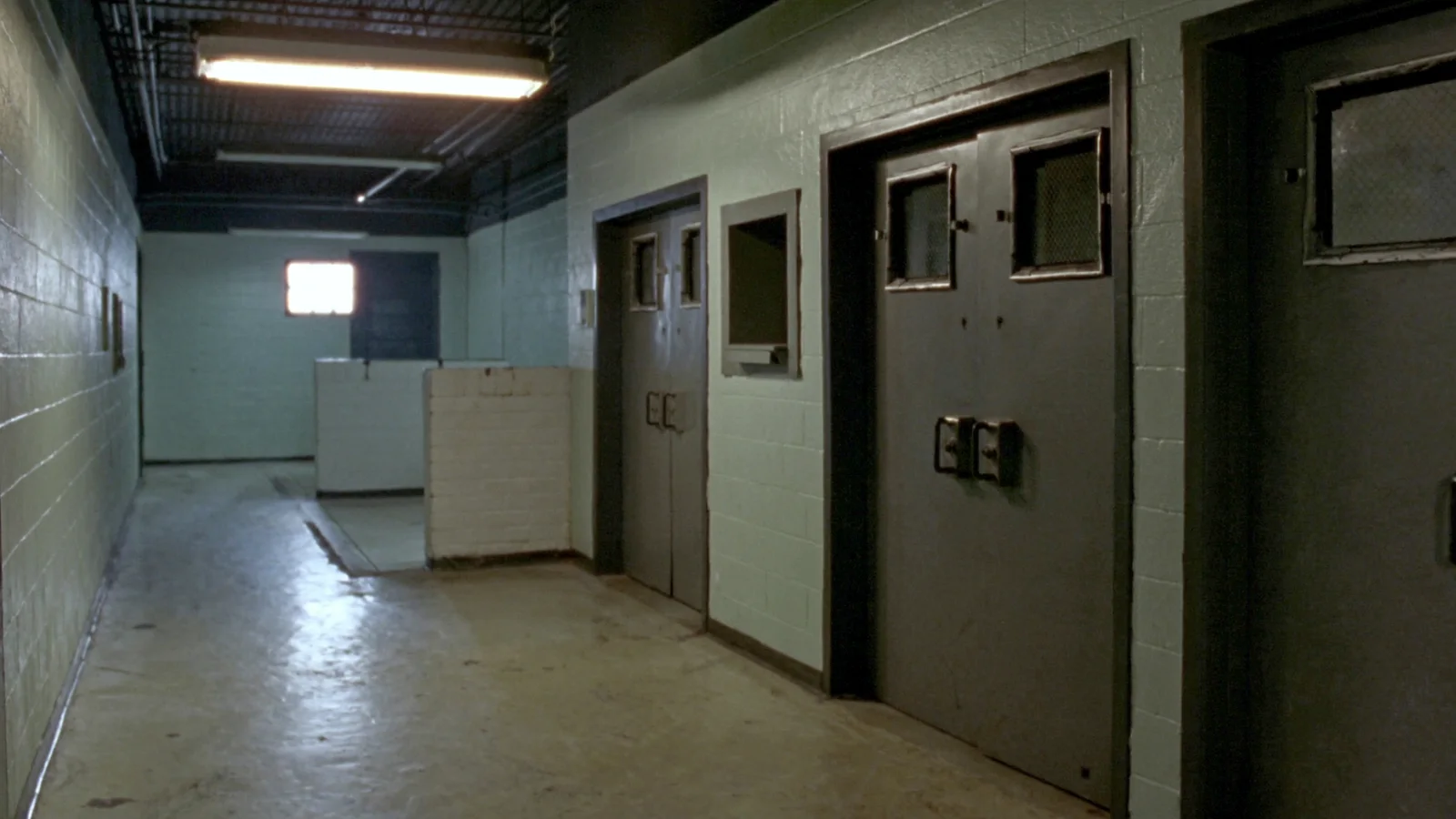
Claims name juvenile halls, probation camps, and child welfare placements across the county. The best-known are listed below, but this is not an exhaustive list. Smaller camps, temporary placements, and long-closed facilities appear throughout the claim files.
| Facility | System | Notes |
|---|---|---|
| Central Juvenile Hall | Probation | Los Angeles; one of the oldest and most frequently named facilities in the claims |
| Barry J. Nidorf Juvenile Hall | Probation | Sylmar; subject of repeated state regulatory findings over conditions in recent years |
| Los Padrinos Juvenile Hall | Probation | Downey; closed, reopened, and repeatedly found unsuitable by state regulators |
| Probation camps (Camp Kilpatrick, Camp Scott, Camp Scudder and others) | Probation | Residential camps in remote parts of the county, with limited outside oversight |
| MacLaren Children’s Center | Child welfare | El Monte; closed in 2003 after decades of complaints, heavily represented in foster-side claims |
| Foster homes and group homes | Child welfare | Private placements supervised by the County. See our foster care page |
If you were in County custody but cannot recall the name of the facility, that is normal and it is not disqualifying. Children moved between halls and camps frequently, often at night, and were rarely told where they were going. Placement records held by the County can usually reconstruct where and when you were held.
How 7,000 claims arrived at once
For most of the last century, a person abused as a child in California had a few years after turning 18 to sue, a deadline that had almost always expired by the time an adult survivor was ready to talk about it, let alone litigate. Two changes in California law dismantled that barrier.
AB 218 (2019)
Assembly Bill 218 did three things that together produced this settlement. It extended the standard deadline for childhood sexual assault claims to age 40, or five years from the date the survivor reasonably discovered that psychological injury resulted from the abuse, whichever is later. It opened a three-year revival window during which claims already time-barred could be filed regardless of how old they were. And critically for cases against government bodies, it removed the requirement that a claimant first file an administrative government claim, a short-fuse procedural trap that had historically killed public-entity abuse cases before they started.
That last provision is why Los Angeles County, rather than a private organization, ended up facing the largest abuse settlement in the country. The revival window applied to public entities with the same force as private ones.
AB 452 (2023)
A later bill eliminated the statute of limitations altogether for childhood sexual assault occurring on or after January 1, 2024. It does not apply retroactively, so it has no effect on the historical claims in this settlement, but it means that for abuse occurring now, in California, there is no deadline at all.
Revival windows are the single biggest driver of institutional abuse litigation nationwide. New York’s Child Victims Act and Adult Survivors Act, Maryland’s Child Victims Act, and similar laws in more than twenty states have each produced waves of filings against schools, Catholic dioceses, and juvenile detention systems. Our statute of limitations page tracks which windows are open, closing, or already gone.
Timeline of the settlement
The earliest conduct alleged in the settled claims dates to 1959. Claims cluster heavily in the 1970s through the 2000s, but span the entire period.
Extended deadlines, a three-year revival window, and removal of the government-claim presentation requirement for childhood sexual assault claims.
Thousands of claims are filed against the County during the three-year window, many by survivors whose claims had been legally dead for decades.
The County agrees to resolve close to 7,000 claims of sexual abuse in juvenile detention and foster care in a single aggregate settlement, the largest of its kind in the United States.
The County structures payment across five fiscal years, financed through reserves, judgment obligation bonds, and annual budget appropriations rather than a single lump sum.
The Board of Supervisors approves a further tranche covering survivors not included in the April agreement, bringing the County’s total exposure to roughly $4.8 billion.
Very little money has reached claimants. Meanwhile new claims continue to be filed against the County, and probation officer unions publicly object to how the bulk settlement was reached.
Why the money is moving so slowly
A headline figure of $4 billion suggests a fund sitting in an account waiting to be distributed. That is not what happened. Los Angeles County does not have $4 billion in cash available for this purpose, and it did not borrow the full amount at once.
Instead the County committed to funding the settlement across five fiscal years starting in FY 2025-26, drawing on a combination of budget reserves, judgment obligation bonds, and ongoing annual appropriations. Each year’s tranche has to survive a County budget process that is simultaneously funding the sheriff, the fire department, public health, and homelessness services. Every dollar going to this settlement is a dollar visibly not going somewhere else, and that tension is real and ongoing.
For an individual claimant, the practical consequences are these:
- Allocation takes time. Aggregate settlements are divided by a claims administration process that reviews each claim’s severity, duration, corroboration, and documented consequences. This is not a per-capita split, and it does not happen quickly with 7,000 claims.
- Payment follows allocation, and the schedule is fixed. Even once your allocation is determined, when you are paid depends on where your tranche falls in the County’s five-year funding plan.
- Nobody can honestly promise you a date. Be skeptical of anyone who does.
The long payment schedule has attracted lawsuit-advance companies offering claimants cash now against a future settlement payment. These advances are not loans in the regulated sense and effective rates can be extraordinary. If you are being pressured toward one, get the terms reviewed by your own attorney before signing anything.
The probation unions’ objection
Probation officer unions have publicly objected that the County settled in bulk without taking depositions or conducting independent review of individual allegations, leaving accused employees with no meaningful opportunity to respond. It is a real objection and it deserves a straight answer rather than dismissal.
What happened is a consequence of how aggregate settlements work. Facing roughly 7,000 claims, the County made an institutional judgment: the cost, duration, and risk of litigating each one individually, with the possibility of catastrophic individual verdicts, exceeded the cost of resolving them together. That judgment is about the County’s exposure as an institution. It is not a finding that any particular employee did any particular thing.
The consequence the unions identify is genuine: individuals named in claims that were settled rather than tried have no forum in which to contest the allegation. It also means the settlement produced no public record of findings, no adjudicated facts, and no disciplinary outcomes. For survivors who wanted the truth established rather than purchased, that is its own kind of loss.
Can you still file?
Yes, and people are. The settlement resolved the claims that had been filed. It did not close the County to new ones, and it did not change the deadline that applies to you.
A live claim turns on facts specific to you: when the abuse occurred, how old you were, when you reasonably connected your psychological injury to it, and whether any window applies. Some people who assumed they were decades too late are not. Others genuinely are out of time. Both answers are common, and neither can be determined from a general rule.
What proof actually looks like
The single most common reason survivors never call anyone is the belief that without a police report, a witness, or a name, there is nothing to prove. In institutional abuse cases that belief is usually wrong, because the case is built against the institution rather than reconstructed from one person’s memory.
Placement records
County records showing which facility you were in, on which unit, and during which months. These usually exist even when everything else is gone, and they establish that you were where you say you were.
Personnel & complaint files
Prior complaints against the same staff member or the same unit, internal investigations, and transfer histories. Patterns across many claimants do work that no single claimant’s memory can.
Contemporaneous disclosure
Anyone you told at the time or since: a sibling, a friend, a partner, a therapist, a case worker. It does not have to have been reported to be evidence that you disclosed it.
Documented consequences
Medical and mental health records, school records showing a break in trajectory, employment history, and substance use treatment. These establish harm, which is what damages are calculated from.
You do not need to have all of these. You do not need to have any of them before you make a call, because gathering records is the attorney’s job, not yours. What you need is enough of a description of when and where to let someone check whether a claim is possible.
Questions we are asked most
Not necessarily. California's AB 218 extended the deadline for childhood sexual assault claims to age 40 or five years from the date you reasonably discovered the resulting psychological injury, whichever is later, and AB 452 eliminated the deadline entirely for abuse occurring on or after January 1, 2024. Many people who assume their claim expired decades ago still have a live claim. The only way to know is to have the specific dates checked.
There is no single per-person figure. The April 2025 agreement is an aggregate fund of roughly $4 billion covering close to 7,000 claims, and individual allocations are determined by the severity, duration, corroboration, and documented consequences of each claim rather than divided evenly. Anyone quoting you a guaranteed per-claimant number is guessing.
Slowly. The County is spreading payment across five fiscal years beginning with FY 2025-26, funded through a mix of budget reserves, judgment obligation bonds, and annual appropriations. As of August 2026 very little money had actually reached claimants. This is the single most common source of frustration for people already in the settlement.
No. Very few survivors can name a staff member from thirty or forty years ago, and the claims process does not require it. Placement records, unit assignments, personnel files, prior complaints against the same facility, and testimony from others held at the same time are all used to build the record.
Foster care claims are covered by the same County settlements. The facts differ because the placements were private homes, group homes, or facilities such as MacLaren Children's Center, but the legal theory is the same: the County placed a child in its custody somewhere unsafe and failed to supervise it.
Not automatically. Survivors in these cases frequently proceed under initials or as a John or Jane Doe. Anonymity is not guaranteed by right, but courts in California have regularly permitted it in childhood sexual abuse cases, and it is something your attorney requests at the outset rather than after your name is already on a public docket.
Probation officer unions have publicly objected that the County settled in bulk without taking depositions or conducting independent review, leaving accused employees with no opportunity to respond to the allegations against them. The County resolved the claims as an institutional liability matter rather than adjudicating each accusation individually.
If you were held in an LA County juvenile hall, camp, or foster placement, a review takes one conversation and costs nothing. Request a confidential case review, or read our guide to what filing actually involves before you decide.
- Los Angeles County Board of Supervisors, settlement approvals of April 2025 and October 2025, drawn from County board agendas and public reporting on the approximately $4 billion and $828 million agreements.
- California Assembly Bill 218 (2019), amending Code of Civil Procedure § 340.1, covering extended deadlines, the three-year revival window, and removal of the government claim presentation requirement for childhood sexual assault claims.
- California Assembly Bill 452 (2023), eliminating the statute of limitations for childhood sexual assault occurring on or after January 1, 2024.
- Public statements by Los Angeles County probation officer labor organizations regarding bulk settlement of claims without depositions or independent review.
- California Board of State and Community Corrections inspection findings regarding Los Padrinos and Barry J. Nidorf juvenile halls.
- The Schroeder Firm, juvenile detention abuse practice.
Figures on this page reflect publicly reported settlement amounts and docket counts as of August 2026 and are subject to change. Allegations described here are allegations unless a court has found otherwise.