Every juvenile facility in the country shares the same structural vulnerability: a small number of adults with total control over children whose credibility has already been formally doubted by a court, in a building the public does not visit. What differs from state to state is not the risk. It is whether the law lets a survivor do anything about it.
Where claims are active
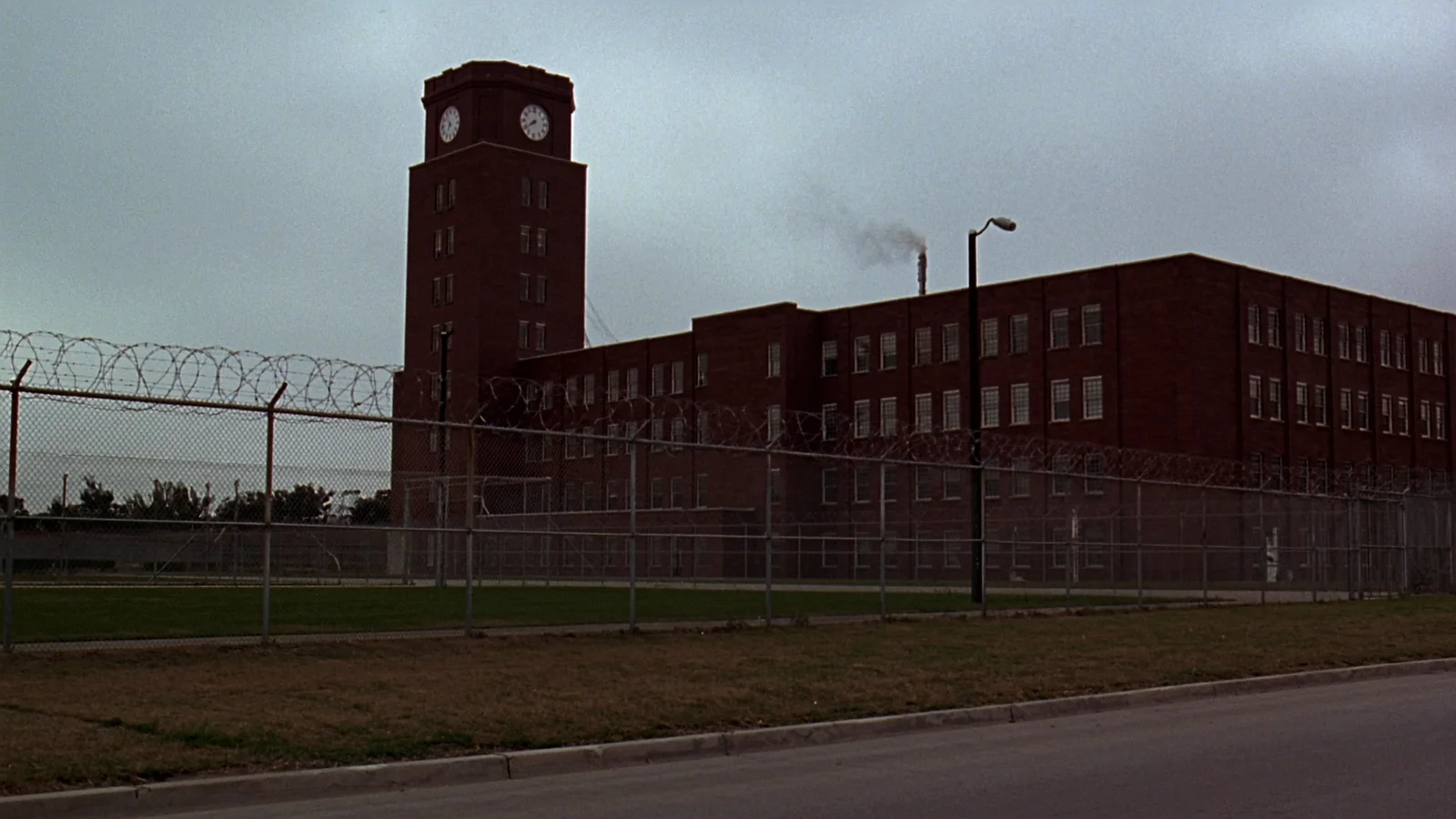
Beyond Los Angeles County, survivors have brought significant claims against youth detention systems in a number of states. The list below is illustrative rather than exhaustive, because new claims and new consolidated actions appear regularly, and litigation in this area has expanded steadily since the first wave of revival windows.
| State | What claims typically involve |
|---|---|
| California | LA County juvenile halls, probation camps, and DCFS placements: the largest settlements of their kind, resolved in 2025. Full case page |
| Illinois | State and county youth centers, with large groups of claimants filing together against the Illinois Department of Juvenile Justice and Cook County facilities |
| Maryland | State juvenile facilities, with filings driven by the 2023 Child Victims Act, which eliminated the civil filing deadline for childhood sexual abuse and revived expired claims |
| Michigan | State and county juvenile detention and residential treatment placements |
| New Hampshire | The Youth Development Center in Manchester, one of the most extensively litigated state facility cases in the country, involving both criminal prosecutions and a state-created claims fund |
| New Jersey | State training schools and juvenile facilities, following the state’s 2019 statute extending and reviving childhood sexual abuse claims |
| Other states | Claims have been brought against youth facilities in many additional states; whether they are viable depends on that state’s tort claims act and filing deadlines |
Whether a claim is viable depends on your specific dates and the current state of that state’s law, both of which change. Use this to understand the landscape, then have your own facts checked. Our 50-state deadline reference goes into more detail.
The three hurdles unique to suing a government
Private institutional cases turn mostly on liability and damages. Public-entity cases have to clear three additional gates before anyone gets to those questions.
1. Sovereign immunity and its waiver
The baseline rule is that a state cannot be sued without its consent. Every state has consented to some extent through a tort claims act, but the scope of that consent varies. Some acts exclude intentional torts, which can matter when the underlying conduct is an assault. Some exclude discretionary functions, which defendants will argue covers staffing and supervision decisions. Whether a childhood sexual abuse claim fits inside a particular state’s waiver is frequently the whole case.
2. Notice-of-claim requirements
Many states require an administrative notice filed with the government entity within a short window, often 90 to 180 days, before a lawsuit may be brought. Applied literally to childhood abuse, this is an impossibility: it would require a child in custody to file a formal legal notice against the agency holding them, within months.
Recognizing that, several states have exempted childhood sexual abuse claims from the requirement or extended it substantially. California’s AB 218 removed it outright, which is precisely why the Los Angeles County claims became viable at the scale they did. In states that have not made that change, the notice requirement remains one of the most effective defenses a public entity has.
3. Damages caps
Even a fully successful claim may run into a statutory ceiling. Caps against government defendants in some states are low enough that they bear no relationship to the harm proven, and they apply regardless of how egregious the institutional conduct was. This is the main reason two survivors with nearly identical experiences in two different states can end up with wildly different outcomes.
What these cases have in common
Across every state, the factual pattern in juvenile facility claims is close to identical:
- Total control. Staff controlled food, sleep, phone access, discipline, visitation, and reports that influenced release dates. That last one is the mechanism of silence in most of these cases.
- No external reporting path. Complaints went to supervisors inside the same institution, or nowhere.
- Discredited complainants. Children in custody had already been adjudicated delinquent. Being disbelieved was the expected outcome of reporting, and both staff and children understood that.
- Transfer instead of removal. Accused staff were moved between units or facilities rather than investigated or terminated.
- Isolation by design. Rural camps and facilities far from families, with limited outside visitation and no independent monitoring.
That consistency is legally useful. It means these cases rarely rest on one person’s memory. They rest on patterns established across many claimants, corroborated by personnel records, regulatory inspections, and prior complaints.
Federal law also leaves a paper trail. The Prison Rape Elimination Act of 2003 and the Department of Justice standards issued under it in 2012 impose specific obligations on juvenile facilities, covering reporting channels, cross-gender supervision, staffing and periodic independent audits. Those audits, the incident reports behind them, and any finding of non-compliance exist whether or not a complaint was ever acted on, and they are obtainable in discovery.
Questions we are asked most
Sovereign immunity is the default rule that a government cannot be sued without its consent. Every state has waived it to some degree through a tort claims act, and the terms of that waiver vary enormously: what you can sue for, how much you can recover, and how quickly you must act. Several states have specifically waived immunity for childhood sexual abuse claims. California went furthest, removing the government claim presentation requirement entirely for these claims through AB 218.
Many states require you to file a short administrative notice with the government entity before you may sue, sometimes within 90 to 180 days of the injury. For a survivor of childhood abuse this is often an impossible standard, and it historically killed public-entity claims outright. Some states now exempt childhood sexual abuse claims from the requirement or extend it. Whether your state does is a threshold question that has to be answered before anything else.
Often yes. State tort claims acts frequently cap damages against government defendants, sometimes at a few hundred thousand dollars per claimant, sometimes with an aggregate cap per incident. Those caps can dramatically change the value of an otherwise strong claim and are a major reason outcomes vary so much between states with similar facts.
No. Institutional claims run against the government entity that operated the facility, and that entity, whether a state department of juvenile justice or a county probation department, still exists even when the building is gone. Closure sometimes makes records harder to obtain, but it does not eliminate the defendant.
It should not, and courts generally do not treat it that way. A delinquency adjudication is not a credibility judgment about whether you were later abused by staff, and the entire premise of these cases is that children in custody were targeted precisely because no one would believe them. Institutional patterns established across many claimants are also far less vulnerable to individual credibility attacks than a single-witness account.
- State tort claims acts and their childhood sexual abuse exceptions; notice-of-claim provisions and damages caps vary by jurisdiction.
- Prison Rape Elimination Act of 2003, Pub. L. 108-79, and the Department of Justice National Standards to Prevent, Detect, and Respond to Prison Rape (2012), including the juvenile facility standards.
- California Assembly Bill 218 (2019); Maryland Child Victims Act (2023); New Jersey S477 (2019).
- Public reporting and litigation records concerning the New Hampshire Youth Development Center, Illinois Department of Juvenile Justice facilities, and county youth detention systems.
- The Schroeder Firm, juvenile detention abuse practice.